

News
Improving access to healthcare in northern Benin for the most vulnerable populations
In the Alibori department, in north-eastern Benin, the humanitarian situation is changing rapidly. Long considered relatively stable, this region bordering Niger and Nigeria is now facing a gradual rise in insecurity.
Publié le 27/05/2026 | Temps de lecture : 18 min
Access to healthcare in Benin: why is the situation deteriorating in the north of the country?
Violence linked to armed groups, which had previously been confined to the Sahel and north-western Nigeria, is gaining ground. And with it comes an increasingly visible phenomenon: entire families being forced to flee their villages to seek refuge elsewhere.
The most recent data show a clear trend: violent incidents increased by around 80% between 2024 and 2025, whilst the death toll tripled over the same period.
This deterioration has an immediate impact on the population: it is causing an increasing number of internal displacements.
Families are leaving their villages to reach areas considered safer, mainly secondary urban centres and neighbouring municipalities.
Since 2024, the municipalities bordering Alibori have seen a rapid increase in population movements.
The figures illustrate this acceleration:
- In June 2024, around 4,000 displaced people were recorded in the region.
- By February 2026, the figure had risen to nearly 12,800, more than triple the number in less than two years.
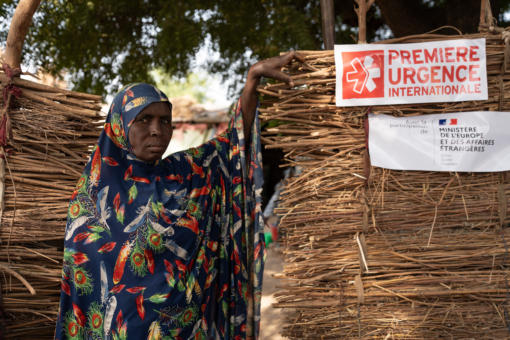
Some recent events illustrate this trend:
- 2,586 people arrived in Malanville-Karimama from Niger in June 2025
- more than 3,100 people have been displaced to Segbana from Nigeria since February 2026
The vast majority of these families are settling in already fragile host communities, which is putting further strain on local resources and essential services.
Access to healthcare in Benin: when the security crisis becomes a health crisis
These displacements have a direct but often less visible consequence: they further undermine access to healthcare.
In Alibori, healthcare infrastructure is limited and already under strain. The influx of people, combined with insecurity, makes access to services even more difficult, particularly for the most vulnerable populations.
And yet, healthcare needs remain very high.
In this region, the health data is particularly telling:
- 391 maternal deaths per 100,000 live births;
- 80 deaths of children under 5 per 1,000 live births;
- including 23 neonatal deaths per 1,000 births.
Malaria remains the leading cause of illness and death among young children. Furthermore, vaccination coverage remains insufficient: more than half of children are not vaccinated against measles, which increases the risk of epidemics.
The nutritional situation further exacerbates these vulnerabilities.
Malnutrition in northern Benin: a major aggravating factor
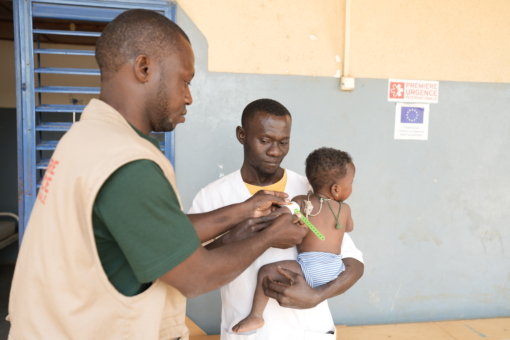
In Alibori, nearly one in two children under the age of five suffers from stunted growth, a sign of chronic malnutrition.
Added to this is a significant number of children suffering from moderate or severe acute malnutrition, requiring urgent treatment.
Pregnant and breastfeeding women are also particularly at risk.
Under these circumstances, access to high-quality, rapid and appropriate care becomes a matter of life and death.
Humanitarian aid in Benin: a response combining emergency relief and long-term sustainability
Since December 2024, Première Urgence Internationale has been operating in the health zones of Banikoara, Malanville-Karimama and Kandi-Gogonou-Segbana to support local populations, internally displaced persons, refugees and asylum seekers.
Our approach combines emergency response with the sustainable strengthening of the health system.
The objectives are clear:
- to improve free access to essential healthcare;
- to reduce the main causes of preventable mortality.
Free healthcare: a decisive lever for vulnerable populations
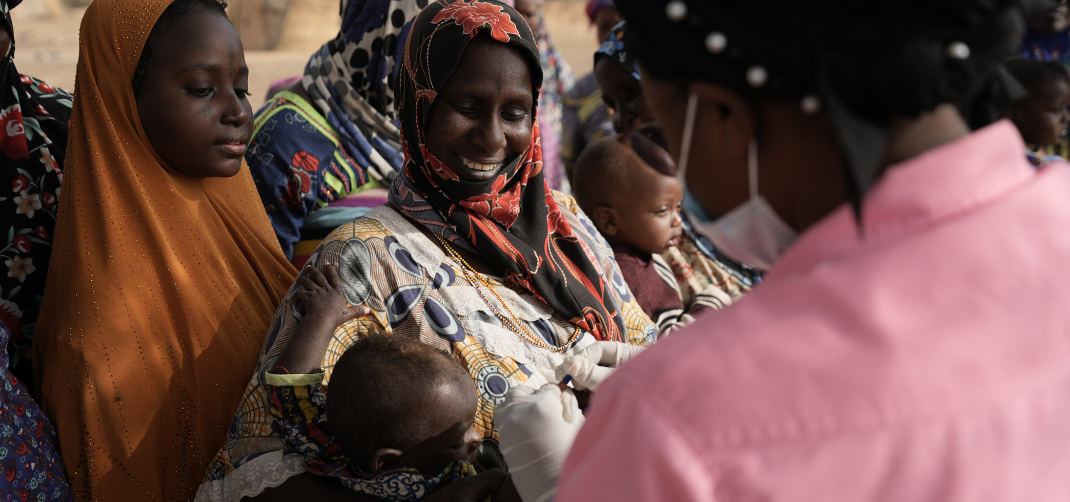
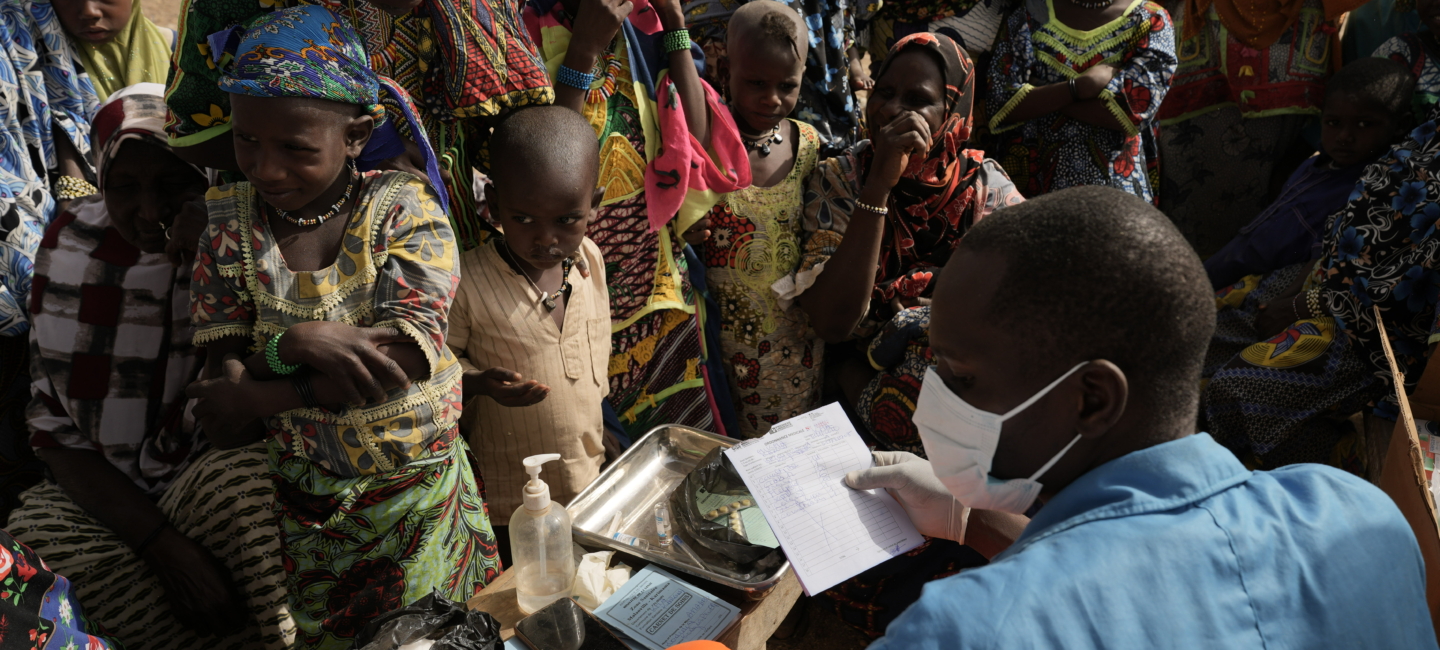
Access to healthcare in Benin: an advanced strategy in the Alibori department © Yanick Folly
In this region, cost and geographical remoteness remain the main barriers to accessing healthcare.
Première Urgence Internationale is working to remove these barriers through a range of intervention methods.
- Free healthcare in emergency situations: in areas affected by forced displacement, epidemics or natural disasters, teams provide temporary support to health centres to ensure free healthcare for affected populations until the situation can be managed by the public health system.
Thus, since the beginning of March 2026, Première Urgence Internationale teams have been deployed in the commune of Segbana alongside health authorities to address the most critical needs of populations displaced following an upsurge in violence linked to non-state armed groups along the Benin-Niger border.
- Targeted free care for the most vulnerable: Première Urgence Internationale guarantees free healthcare for pregnant and breastfeeding women (antenatal consultations, pregnancy monitoring, malaria care, medicines), children under five (malaria and malnutrition care, medicines), and children suffering from moderate or severe acute malnutrition in health centres identified as being the most vulnerable.
- Fully free care for children with severe acute malnutrition and medical complications, including meals for accompanying carers.
- Deployment of outreach strategies: the supported health centres and their teams travel directly to villages with their equipment to offer free consultations and care as close as possible to residents, to raise awareness of good health and hygiene practices, to screen for malnutrition in children, to organise cooking demonstrations, and to refer the most severe cases to health centres.
- Joël, who has been in charge of community activities at Première Urgence Internationale since 2025, explains: “Advanced strategies are important because they allow us to reach communities that are very far from health centres, and to treat children and vulnerable people in these communities”.
Sustainably strengthening health facilities
Beyond the emergency response, Première Urgence Internationale’s activities in Benin also aim to improve the capacity of the local health system.
These are based in particular on:
- training medical teams and health workers;
- supporting compliance with national protocols;
- improving the quality of care and patient reception;
- supporting families during their children’s hospital stays
The aim is to ensure more effective access to care, both now and in the long term.
Tangible results for communities in Alibori
After more than a year of intervention, the impact of these initiatives is already evident.
Women can now access free antenatal consultations and receive care throughout their pregnancy.
Children suffering from malnutrition receive comprehensive care at no cost to their families.
For many, this simply means being able to seek treatment without having to give up due to a lack of funds.
- Aïssatou, whose family lives near the Nigerien border, was thus able to receive comprehensive medical care after her family was supported by community health workers during outreach campaigns (Read her testimony published on 11 February 2026I).
- In Malanville, Alimiyaou says: “Thanks to the free antenatal consultations, I am given information about my health and that of the baby I am carrying, as well as advice on how to manage my pregnancy in good conditions right through to the end.” “Before Première Urgence Internationale arrived, we poor women had no access to healthcare despite wanting to seek treatment. Due to a lack of resources, you are forced to stay at home,” adds Roukaya.
- The mother of a child hospitalised in a therapeutic feeding centre for Severe Acute Malnutrition with Complications (SAMC) says: “I was afraid of the costs because I had no money. But thanks to Première Urgence Internationale, my child was treated for free and I received help to feed myself and stay by his side during his hospitalisation.”
A local crisis, a regional challenge
By facilitating free access to essential healthcare, supporting health centres and strengthening prevention at community level, Première Urgence Internationale, thanks to financial support from the Crisis and Support Centre (CDCS) and the European Union, is helping to bring about lasting improvements in the health of the most vulnerable populations in Alibori.
Beyond Benin, this mission forms part of a regional monitoring approach covering the coastal countries of West Africa, which are facing the spillover effects of the Sahel crisis. This monitoring is key to anticipating humanitarian needs and strengthening the resilience of health systems in the face of constantly evolving regional dynamics.