

News
Understanding the Crisis in Lebanon: Context and Humanitarian Challenges
For several years, Lebanon has been facing one of the most complex situations in the Middle East. Political instability, economic collapse, population displacement and the consequences of regional conflicts have left millions of people in need of humanitarian assistance. Discover the key challenges of the crisis in Lebanon and how Première Urgence Internationale is responding to the needs of the most vulnerable populations.
Publié le 19/08/2026 | Temps de lecture : 15 min
What is the current situation in Lebanon?
Lebanon is currently facing a multidimensional crisis, resulting from decades of political instability, economic difficulties and social tensions, compounded by the consequences of regional conflicts.
The Beirut port explosion in August 2020 significantly exacerbated the country’s vulnerabilities and further undermined public trust in the authorities. Since then, the collapse of the Lebanese pound and the economy has severely affected living conditions. Gross domestic product (GDP) fell from $54.9 billion in 2018 to $17.94 billion in 2023.
These persistent economic and political challenges have been compounded by the consequences of the conflict in Syria and the escalation of hostilities between Israel and Hezbollah. The accumulation of these successive shocks has considerably weakened the country, making the humanitarian situation in Lebanon particularly complex and the intervention of humanitarian organisations all the more essential.
Why has the conflict in Gaza worsened the crisis in Lebanon?
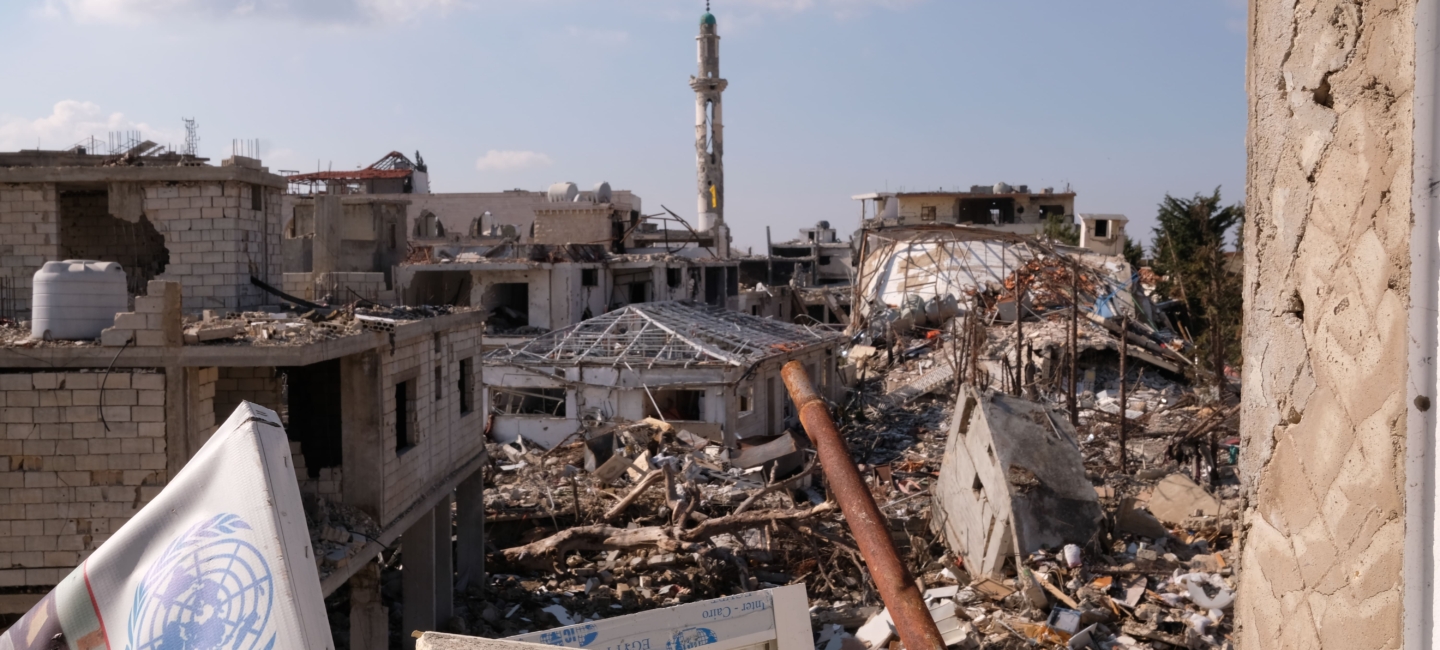
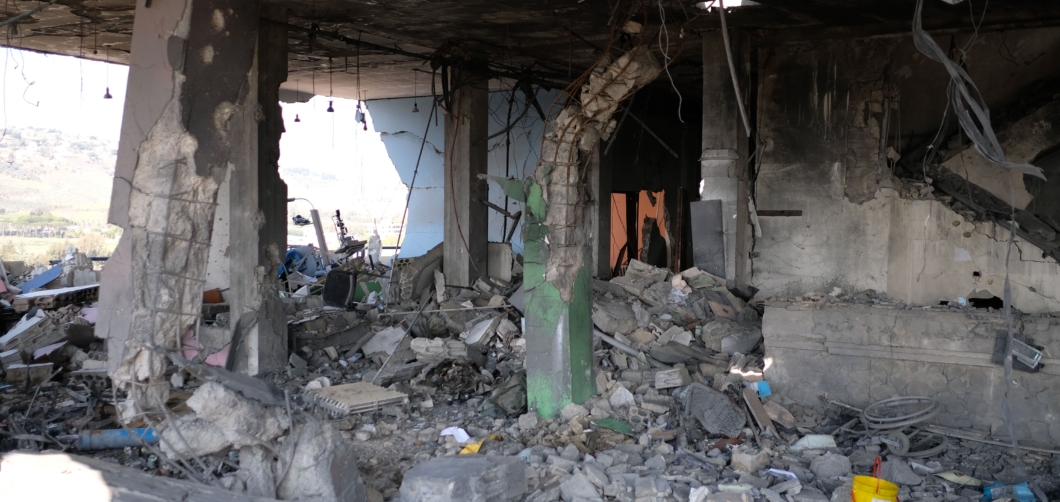
After several months of tensions along Lebanon’s southern border, the escalation of the conflict in September 2024 caused widespread destruction in southern Lebanon, Nabatiyeh, the Bekaa Valley and the southern suburbs of Beirut. Despite the ceasefire agreement reached in November 2024, strikes continued in several areas, increasing humanitarian needs and causing significant population displacement.
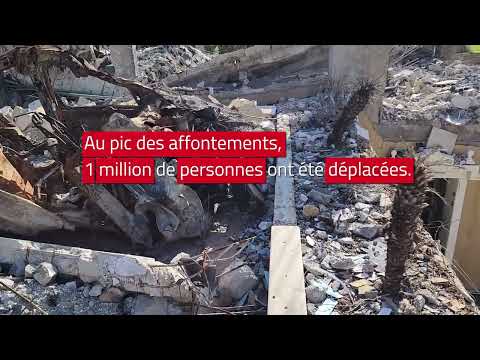
A renewed escalation of hostilities between March and June 2026 once again had severe consequences for civilians. According to the Lebanese Ministry of Public Health, at least 3,516 people were killed and 10,674 injured during this period. More than one million people were forced to flee their homes within a matter of weeks, sometimes repeatedly, as strikes intensified and evacuation orders expanded.
Since the ceasefire came into effect, several hundred thousand people have been able to return to or move closer to their areas of origin. However, nearly half of them have since been displaced again. Today, around 800,000 people remain displaced across the country, while population movements continue to evolve in line with the security situation.
Why does Lebanon host so many refugees?
Lebanon hosts the highest number of refugees per capita in the world. The country is home to approximately 1.4 million Syrian refugees, as well as several hundred thousand Palestinian refugees and migrants of various nationalities, many of whom live in precarious conditions.
Since December 2024, more than 110,000 additional people have arrived from Syria, placing further pressure on public services already weakened by the economic crisis and chronic underfunding of public institutions.
This situation directly affects access to essential services, particularly healthcare. According to the United Nations, the high concentration of refugees, combined with the economic crisis and the consequences of the conflict, is placing increasing pressure on the healthcare system and limiting access to primary healthcare for the most vulnerable populations.
What impact has the economic crisis had on the population?
Since 2019, Lebanon has faced a succession of crises that have severely weakened the population: an economic and financial crisis, political deadlock, the Beirut port explosion, the COVID-19 pandemic, followed by the consequences of the conflict along the border with Israel.
Although inflation slowed in 2024 and the Lebanese pound stabilised, the effects of the war led to renewed price increases and substantial economic losses. Damage is estimated at between $10 billion and $13 billion. More than 14,700 businesses and nearly 14,800 farms were completely destroyed, severely affecting the livelihoods of many families.
While humanitarian needs remain very high, the country’s reconstruction continues to face limited resources and a decline in international assistance. This situation continues to affect the most vulnerable populations and makes it more difficult to restore essential services.
What is the humanitarian situation in Lebanon?
Lebanon is currently facing a complex humanitarian crisis driven by the accumulation of multiple crises. The consequences of the economic crisis, the presence of a very large refugee population, population displacement linked to the conflict and damage to essential infrastructure continue to increase humanitarian needs across the country.
For several years, Lebanon has hosted a large refugee population, primarily from Syria and the Palestinian territories, as well as migrants of various nationalities living in highly precarious conditions. Since December 2024, more than 110,000 people have arrived from Syria, placing additional pressure on public services already weakened by economic difficulties and underfunding.
According to the 2025 Lebanon Response Plan, 4.1 million people currently require humanitarian assistance: 2.2 million vulnerable Lebanese people, 1.4 million displaced Syrians, 200,000 Palestine refugees in Lebanon, more than 23,000 Palestine refugees from Syria, and nearly 176,000 migrant workers of various nationalities.
What are the main humanitarian needs in Lebanon?
Humanitarian needs affect many essential sectors, including healthcare, protection, access to safe housing, food security, water, hygiene and sanitation.
For several years, rising prices and falling incomes have significantly reduced households’ purchasing power. Many families are no longer able to meet their essential needs, while food insecurity continues to increase. Even before the escalation of hostilities, United Nations assessments projected an increase in the proportion of people facing food insecurity, from 19% of the population in March 2024 to 23% in September of the same year. Syrian and Palestinian refugees remain particularly vulnerable to poverty and food insecurity.
Shelter needs also remain significant. Destruction caused by the fighting and successive waves of displacement have left many families without sustainable housing solutions. Public infrastructure and essential services have been placed under considerable strain by population displacement, further increasing vulnerability across the country.
What impact has the conflict had on the healthcare system?
The Lebanese healthcare system is facing the direct consequences of the conflict as well as several years of economic crisis.
Between 2 March and 3 June 2026, more than 162 incidents affecting healthcare facilities or personnel were recorded. These attacks resulted in 128 deaths and 378 injuries among healthcare workers. At the beginning of May, six hospitals and 51 primary healthcare centres remained closed due to insecurity or damage.
Attacks on healthcare infrastructure severely undermine the system’s ability to respond to the population’s growing needs. In some areas south of the “Yellow Line”, movement restrictions and reduced availability of services make access to healthcare particularly difficult. The situation is especially concerning for the most vulnerable populations, including young children, pregnant and breastfeeding women, and people living with chronic diseases.
In this context, humanitarian organisations play an essential role in maintaining the continuity of healthcare services, supporting medical facilities and ensuring access to care for the most vulnerable populations.
What are the main obstacles to delivering humanitarian assistance?
The delivery of humanitarian assistance remains highly dependent on changes in the security situation.
Humanitarian operations are complicated by fighting, movement restrictions and the destruction of infrastructure. In some conflict-affected areas, humanitarian movements must be carefully planned to ensure the safety of teams and the continuity of assistance.
Repeated population displacement also means that humanitarian needs are constantly evolving. Some families have been forced to leave their homes several times within only a few months, while others continue to live in collective shelters or temporary accommodation with limited access to essential services.
In this context, safe, sustained humanitarian access in accordance with international humanitarian law remains essential to enable humanitarian organisations to provide lifesaving assistance to affected populations.
How does Première Urgence Internationale operate in Lebanon?
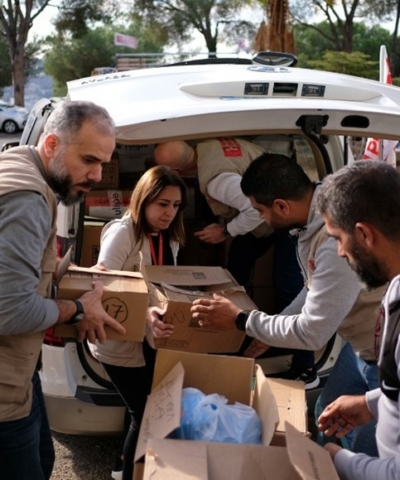
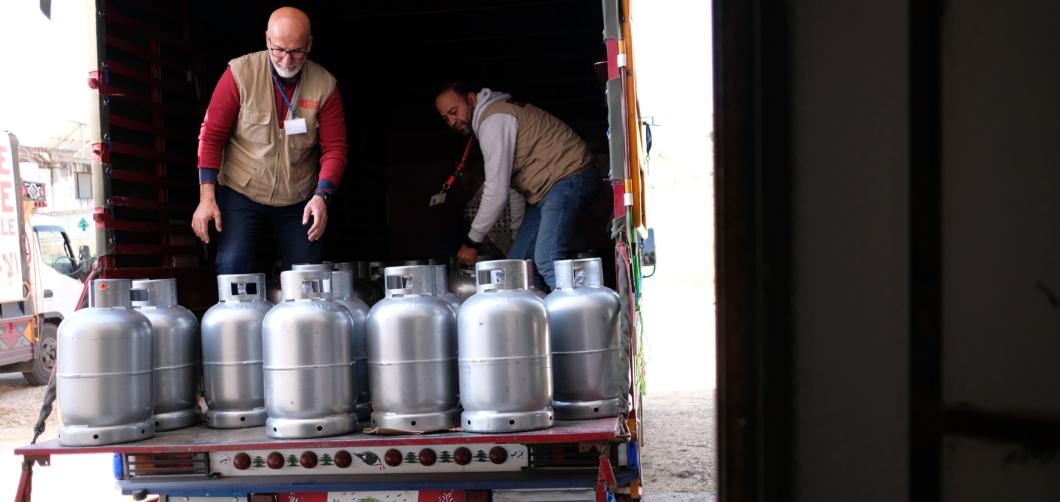
Present in Lebanon since 1996, Première Urgence Internationale works with the most vulnerable populations, including Syrian and Palestinian refugees, internally displaced people and host communities. This approach enables our teams to identify and understand the needs of people affected by the crisis and develop appropriate and sustainable responses. Since hostilities began along the border with Israel in October 2023, our teams have also provided assistance to conflict-affected and displaced populations.
Strengthening the healthcare system is a priority for the mission. Première Urgence Internationale supports primary healthcare centres and hospitals, rehabilitates healthcare infrastructure, provides medical equipment and develops mental health and psychosocial support services. The organisation also works in protection, shelter, nutrition, food security, water, hygiene and sanitation to address the consequences of the crisis and population displacement.
Today, the mission includes 182 national staff and 12 international staff and has supported 286,506 people in Lebanon.
How can you support Première Urgence Internationale’s humanitarian activities in Lebanon?
To effectively respond to the needs of people affected by the conflict in Lebanon, financial donations are currently one of the most effective and appropriate ways to help. They enable our teams to respond rapidly, continuously adapt to changes in the situation and provide assistance while respecting people’s dignity.
1. Make a financial donation: effective support that preserves dignity
Donating online through our secure donation form is the fastest way to help.
Responsiveness: Financial donations allow us to purchase essential items such as medicines, water and shelter materials directly in neighbouring countries or on local markets.
Flexibility: If needs change within 24 hours, funds can be immediately redirected.
If no dedicated fundraising campaign is open for this crisis, your donation will be allocated to our Emergency Fund. This fund safeguards our independence and enables us to intervene within the first hours of a disaster, even before international assistance is fully mobilised.
Why don’t we accept in-kind donations such as clothing or food?
Although the intention is generous, sending material goods from France can sometimes have negative consequences for affected populations and humanitarian operations. This reflects the humanitarian principle of “Do No Harm.”
Logistics: Transporting clothing or food by air or sea often costs more than the value of the goods themselves. These resources are far more useful when invested directly in medical care or essential services on the ground.
The local economy: Large-scale deliveries of free goods can weaken local economies by competing with traders trying to maintain their activities despite the crisis. Purchasing locally whenever possible instead helps support these economies and strengthen community resilience.
Matching actual needs: Needs on the ground are highly specific, from particular medicines and food standards to appropriate hygiene kits. Unsolicited donations often create logistical bottlenecks that slow down the delivery of lifesaving assistance.
Dignity: Providing products suited to the local culture and climate respects the dignity of the people receiving assistance.
2. Raise awareness: essential support to ensure Lebanon is not forgotten
Supporting humanitarian action is not only about making a financial contribution. Raising awareness of an underreported crisis is also an essential form of engagement.
By liking, commenting on or sharing our social media posts, you can help keep the humanitarian crisis in Lebanon visible in the public sphere, raise awareness of the scale of humanitarian needs and remind others that millions of civilians still require assistance.
This visibility helps us reach new audiences, mobilise further support and ensure that the crisis does not fade from public attention despite the scale of ongoing humanitarian needs.
Even without making a donation, a simple share can amplify calls for assistance, support the work of humanitarian teams on the ground and strengthen mobilisation around the most vulnerable populations.
How can you make a donation to support our activities?
3. Donate online
To support our activities, you can make a secure donation directly through our online donation platform to our Emergency Fund.
Our Emergency Fund gives us the flexibility to respond rapidly and provide long-term assistance to the most vulnerable populations.
This financial independence also enables our teams to respond to crises that receive less international attention. 94% of our funds are directly allocated to our social missions.
Your donations enable us to be present before crises in some of the world’s most unstable regions, respond as quickly as possible during emergencies, and remain on the ground after the immediate crisis has passed to meet people’s essential needs and contribute to stabilisation and reconstruction.
4. Donate by cheque
Make your cheque payable to Première Urgence Internationale and send it to:
2, rue Auguste Thomas – 92600 Asnières-sur-Seine, France
To ensure that your donation is allocated to a specific response, please indicate Lebanon.
Did you know? Your donation entitles you to a tax reduction equal to 75% of the amount donated (up to the limit established under the Loi Coluche), and 66% beyond that threshold.
For donations of more than €10,000, please contact us at [email protected].
5. For companies: corporate philanthropy
If you represent a company, you can provide financial sponsorship or skills-based support. Contact our team at [email protected] to develop a solidarity initiative tailored to your organisation.
Première Urgence Internationale has an accounting department and a management control department whose rigour and transparency have been confirmed through every audit conducted by our financial partners. Our annual financial statements are also certified each year without qualification by Deloitte & Associés, our statutory auditor.