

News
Understanding the War in Ukraine: Context and Humanitarian Crisis
For nearly four years, the war in Ukraine has continued to have severe consequences for civilians. Russia's full-scale invasion of Ukraine began on 24 February 2022, against a backdrop of decades of tensions between the two neighbouring countries and, more broadly, between Russia and the West following the dissolution of the Soviet Union.
Publié le 25/08/2026 | Temps de lecture : 14 min
What is the current situation in Ukraine?
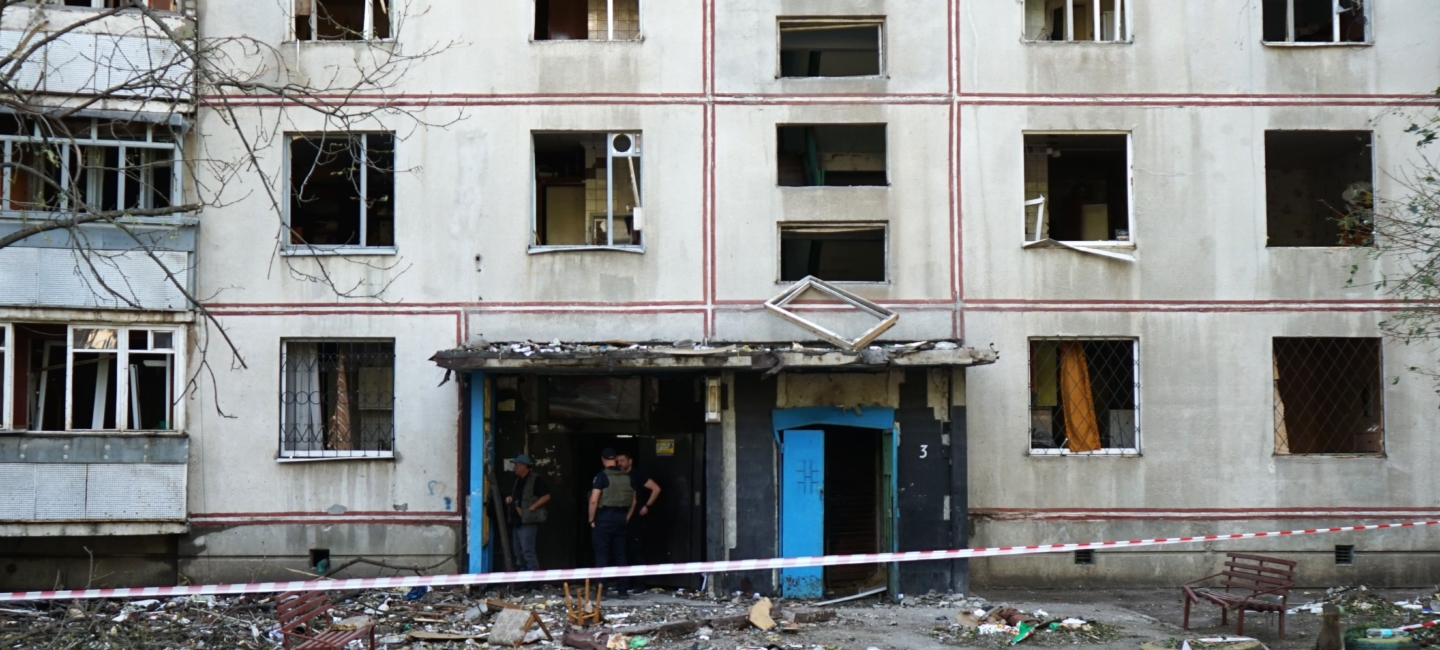
Despite peace talks initiated in the summer of 2025, fighting and strikes continue across Ukraine. Throughout 2026, several waves of drones and missiles have targeted Kyiv and other regions of the country. These attacks have also affected energy infrastructure, resulting in daily power cuts that disrupt access to water, heating, lighting and other essential services, while winter temperatures can fall as low as -20°C.
As the war in Ukraine continues, significant humanitarian needs remain, particularly near the frontline and in Russian-controlled territories, where humanitarian access to civilians is extremely limited.
When did the war in Ukraine start?
The ongoing war in Ukraine began on 24 February 2022, when Russia launched its full-scale invasion of Ukraine. However, the conflict is rooted in a longer history of tensions between Russia and Ukraine.
Following the dissolution of the Soviet Union in 1991, Russia and Ukraine recognised their mutual borders. In 1995, the two countries agreed on the denuclearisation of Ukraine and the lease of the Sevastopol naval base on the Black Sea to Russia.
Over the following decades, Ukraine experienced several political upheavals, from the Orange Revolution to the Euromaidan protests in 2013-2014, accompanied by a gradual geopolitical rapprochement with NATO and the European Union. Tensions culminated in the conflict in Donbas and Russia’s annexation of Crimea in spring 2014, before the full-scale Russian invasion of February 2022.
Why are Russia and Ukraine at war?
The causes of the war in Ukraine are multiple and are rooted in several decades of political and geopolitical developments.
The different territories that make up the sovereign state of Ukraine today have their own histories and different economic realities. The west of the country has historically been more rural and agricultural, while the east, particularly Donbas, was one of the Soviet Union’s major industrial regions.
Following the dissolution of the Soviet Union, Ukraine gradually moved closer to the European Union and NATO. This orientation contributed to tensions with Russia, which considers Ukraine’s potential membership of NATO a direct threat to its sphere of influence.
From 2014 onwards, the conflict in Donbas and Russia’s annexation of Crimea marked a new stage in tensions between the two countries. On 24 February 2022, Russia’s full-scale invasion transformed the conflict into a conventional ground war that continues today.
When did Ukraine become independent?
Ukraine became an independent state in 1991, following the dissolution of the Soviet Union.
The territories that make up Ukraine today have different political, cultural and economic histories. Following the dissolution of the USSR, Ukraine and Russia recognised their mutual borders and established new relations as sovereign states.
This independence is an important element in understanding the current conflict: since February 2022, Ukraine has been fighting for its survival as a nation and sovereign state, according to Première Urgence Internationale’s key messaging.
What is the humanitarian situation in Ukraine?
Russia’s full-scale invasion of Ukraine in February 2022 triggered the fastest population displacement since the Second World War, according to OCHA’s Humanitarian Response Plan.
In 2024, 14.6 million people in Ukraine needed humanitarian assistance, while 3.6 million people were internally displaced and 6.2 million Ukrainian refugees were living across Europe. Humanitarian needs in Ukraine remain particularly acute in areas directly affected by fighting and in Russian-controlled territories.
Between 2022 and 2025, the European Union and its Member States allocated more than €4.2 billion in humanitarian aid to civilians affected by the war in Ukraine.
The prolonged conflict continues to affect access to essential services and generate new needs, particularly in terms of health, mental health and psychosocial support, protection, shelter and access to essential items.
How many people have died in the war in Ukraine?
The human toll of the war in Ukraine continues to rise and remains difficult to establish precisely, particularly when it comes to military casualties.
Estimates of military losses remain highly uncertain. In June 2025, the Center for Strategic and International Studies estimated military casualties at around one million on the Russian side, including 250,000 deaths, and 400,000 on the Ukrainian side, including between 60,000 and 100,000 deaths. These figures are estimates, and the overall casualty figures include both those killed and wounded.
It is therefore important to distinguish between the number of civilian casualties, estimates of military deaths and the total number of military casualties. Ongoing fighting makes it impossible to establish a definitive human toll.
What are the main humanitarian needs in Ukraine?
After several years of war, civilians continue to face significant humanitarian needs in Ukraine, particularly in terms of health, protection, mental health and psychosocial support, shelter and access to essential services.
The protracted nature of the crisis is disrupting the functioning of basic public services. Health facilities may be damaged or face supply shortages, while people living near the frontline encounter greater obstacles in accessing healthcare.
Successive waves of displacement have also left some families particularly vulnerable. Recently displaced people may need rapid access to shelter and essential non-food items, particularly during winter.
Attacks on energy infrastructure also have direct consequences for living conditions. Daily power cuts affect heating, water, cooking and lighting in homes, including in major cities. During winter, these difficulties can generate additional humanitarian needs.
How has the war in Ukraine affected mental health?
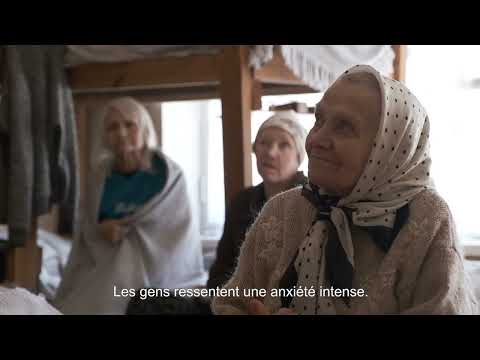
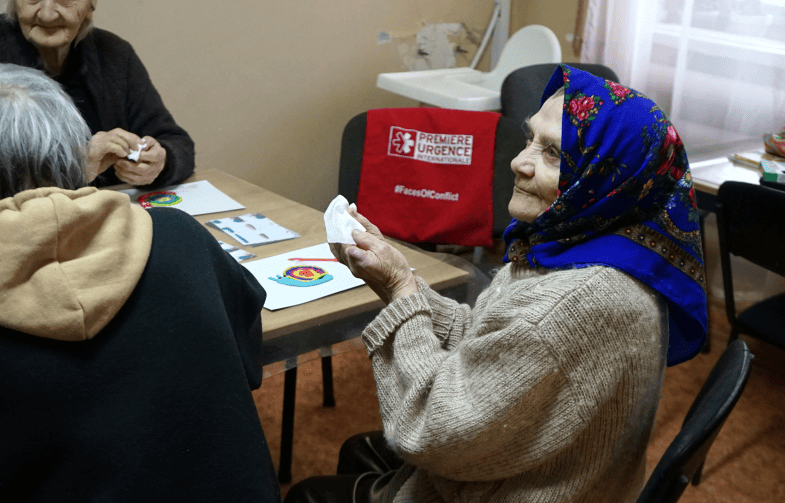
After several years of war, mental health and psychosocial support needs in Ukraine remain particularly high due to repeated exposure to violence, displacement and insecurity.
70% of adults report experiencing anxiety, depression or severe stress, while 77% of school-age children require substantial psychosocial support.
Civilians face multiple sources of stress, including shelling, displacement, family separation, military mobilisation, constant uncertainty and difficulties accessing services. Healthcare workers, who are directly exposed to the consequences of the conflict and face intense professional pressure, also require psychological support.
In Russian-controlled territories, mental health and psychosocial support needs are particularly acute due to prolonged exposure to insecurity, isolation from trusted networks, restrictions on movement and reduced access to reliable services.
Why is humanitarian access in Ukraine so difficult?
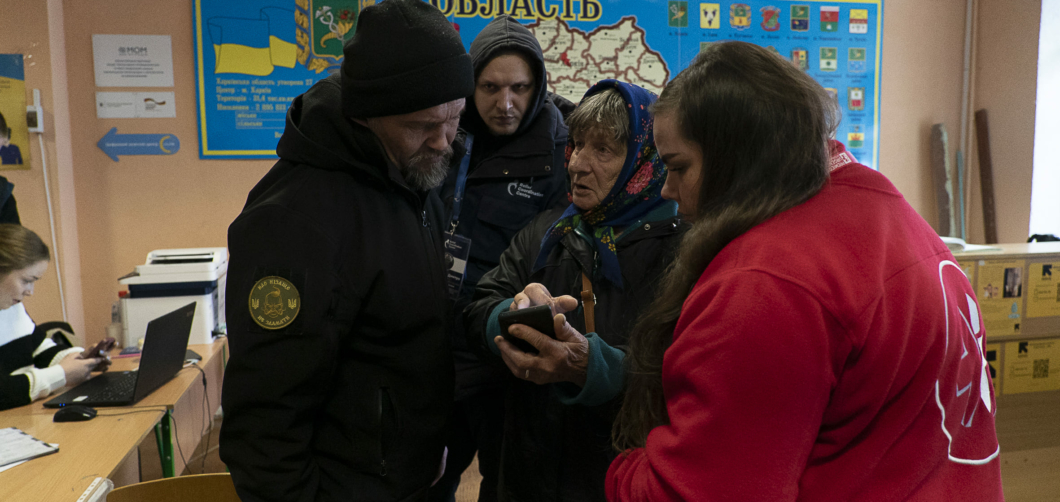
Humanitarian access to vulnerable populations in Ukraine remains particularly challenging near the frontline and in Russian-controlled territories.
More than one million civilians living in these territories face a critical humanitarian situation, with limited access to essential services and a very limited presence of international humanitarian organisations. Multisectoral needs also remain under-documented due to access constraints.
The increasing number and evolving nature of military capabilities are further complicating humanitarian operations. While teams could previously consider certain interventions within 15 to 20 kilometres of the frontline, new equipment and drones can now reach 30 kilometres, further restricting opportunities for safe humanitarian access.
The widespread presence of mines and unexploded ordnance also poses an additional risk to civilians and humanitarian workers.
What does Première Urgence Internationale do in Ukraine?
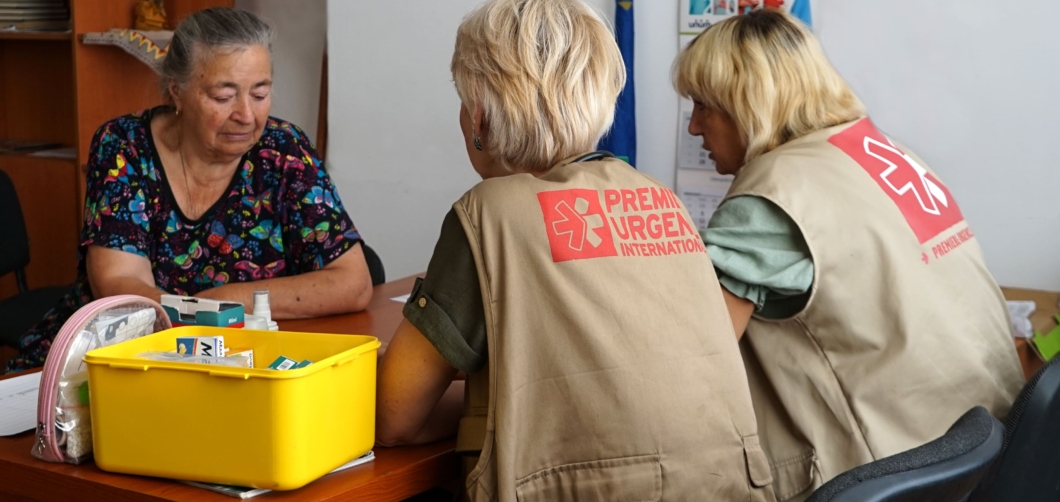
Present in Ukraine since 2014, Première Urgence Internationale is a humanitarian NGO working in Ukraine to support civilians affected by the conflict. The organisation has operational bases in the oblasts of Kharkiv, Dnipropetrovsk and Donetsk, as well as a coordination office in Kyiv, and also operates in the oblasts of Sumy and Zaporizhzhia.
Our teams mainly provide healthcare, mental health and psychosocial support, protection services, including gender-based violence prevention and response, as well as multi-purpose cash assistance. Première Urgence Internationale also supports people and healthcare facilities affected by sudden shocks and helps vulnerable populations access quality primary healthcare.
Particular attention is paid to recently displaced people and populations with specific needs, especially near the frontline and in areas where access to healthcare and protection services remains limited.
How can you support humanitarian aid in Ukraine?
To support people affected by the war in Ukraine, financial donations are currently the most effective and appropriate way to contribute to humanitarian aid in Ukraine. They allow our teams to respond rapidly, continuously adapt to changing humanitarian needs and provide assistance while respecting people’s dignity.
1. Make a financial donation to support humanitarian aid in Ukraine
Donating online through our secure donation form is the fastest way to support our humanitarian action.
- Responsiveness: Financial donations allow us to purchase essential items, medicines, healthcare equipment and other supplies tailored to people’s needs directly from local markets whenever possible.
- Adaptability: If humanitarian needs change within 24 hours, funds can be rapidly reallocated.
If no dedicated fundraising campaign is open for the humanitarian crisis in Ukraine, your donation will be allocated to our Emergency Fund. This fund safeguards our independence and enables us to intervene in the first hours of an emergency, even before international assistance is mobilised.
Why doesn’t Première Urgence Internationale accept in-kind donations?
Although the intention is generous, sending material goods such as clothes or food from France can paradoxically have a negative impact on affected populations and humanitarian operations. This reflects the humanitarian principle of “Do No Harm.”
- Logistics: Transporting clothes or food can cost more than the value of the goods themselves. These resources are much more useful when invested directly in medical care or essential services on the ground.
- The local economy: Large-scale deliveries of free goods can also weaken local economies by competing with businesses trying to continue operating despite the war. Purchasing locally whenever possible instead helps support local economies and contribute to the resilience of communities.
- Meeting actual needs: Humanitarian needs on the ground are highly specific, including medicines, healthcare equipment, essential items and supplies adapted to winter conditions. Unsolicited donations can create logistical bottlenecks that slow down the delivery of vital assistance.
- Dignity: Providing products adapted to people’s needs, local culture and climate respects the dignity of the people receiving assistance.
2. Raise awareness of the humanitarian crisis in Ukraine
Supporting humanitarian action in Ukraine is not only about making a financial contribution. Continuing to raise awareness of the humanitarian consequences of the war in Ukraine is also an essential form of engagement.
By liking, commenting on or sharing our social media posts, you help maintain attention on the humanitarian needs of civilians as the war continues to affect millions of people.
This visibility helps us reach new audiences, mobilise additional support and remind people that, several years after the start of Russia’s full-scale invasion in February 2022, humanitarian needs remain considerable, particularly near the frontline and in areas where humanitarian access is limited.
Even without making a donation, a simple share can amplify calls for humanitarian assistance, support the work of teams on the ground and help sustain mobilisation around the most vulnerable populations.
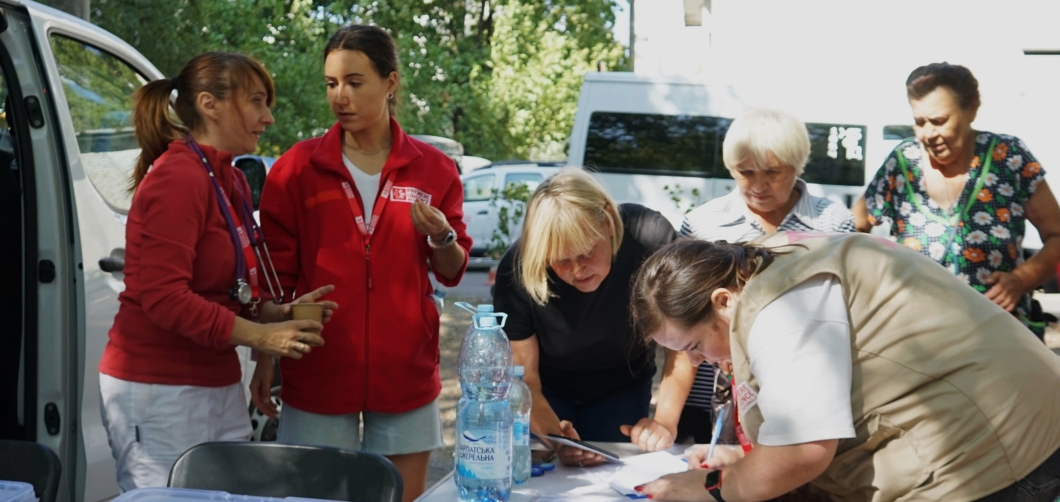
How can you donate to support our humanitarian work in Ukraine?
1. Online donation
To support our humanitarian work in Ukraine and other crisis-affected countries, you can make a secure donation directly through our online donation platform to our Emergency Fund.
Our Emergency Fund gives us the flexibility needed to respond rapidly to the needs of the most vulnerable populations.
This financial independence also enables our teams to act in humanitarian crises that receive less attention or funding. 94% of our funds are directly allocated to our social missions.
Your donations enable us to be present before crises escalate in some of the world’s most unstable regions, respond as quickly as possible during emergencies, and remain on the ground once the immediate emergency has passed to address people’s essential needs and support stabilisation and reconstruction.
2. Donation by cheque
Make your cheque payable to Première Urgence Internationale and send it to:
Première Urgence Internationale
2, rue Auguste Thomas
92600 Asnières-sur-Seine
France
To ensure that your donation is allocated accordingly, please specify Ukraine.
Did you know? Your donation entitles you to a tax reduction equal to 75% of the amount donated within the limit established under the French Loi Coluche, then 66% beyond that threshold.
For donations over €10,000, please contact us at [email protected].
3. For companies: corporate philanthropy
If you represent a company, you can support Première Urgence Internationale through a financial contribution or skills-based sponsorship. Contact our team at [email protected] to develop a solidarity initiative tailored to your organisation.
Première Urgence Internationale has an accounting department and a management control department whose rigour and transparency have been confirmed through audits carried out by our financial partners. Our annual financial statements are also certified each year without qualification by Deloitte & Associés, our statutory auditor.