


Press release
Fighting in Yemen displaces 200,000 people, driving surge in healthcare needs
Since fighting resumed in Yemen in early September, Première Urgence Internationale has observed a sharp increase in humanitarian needs and demand for healthcare services.
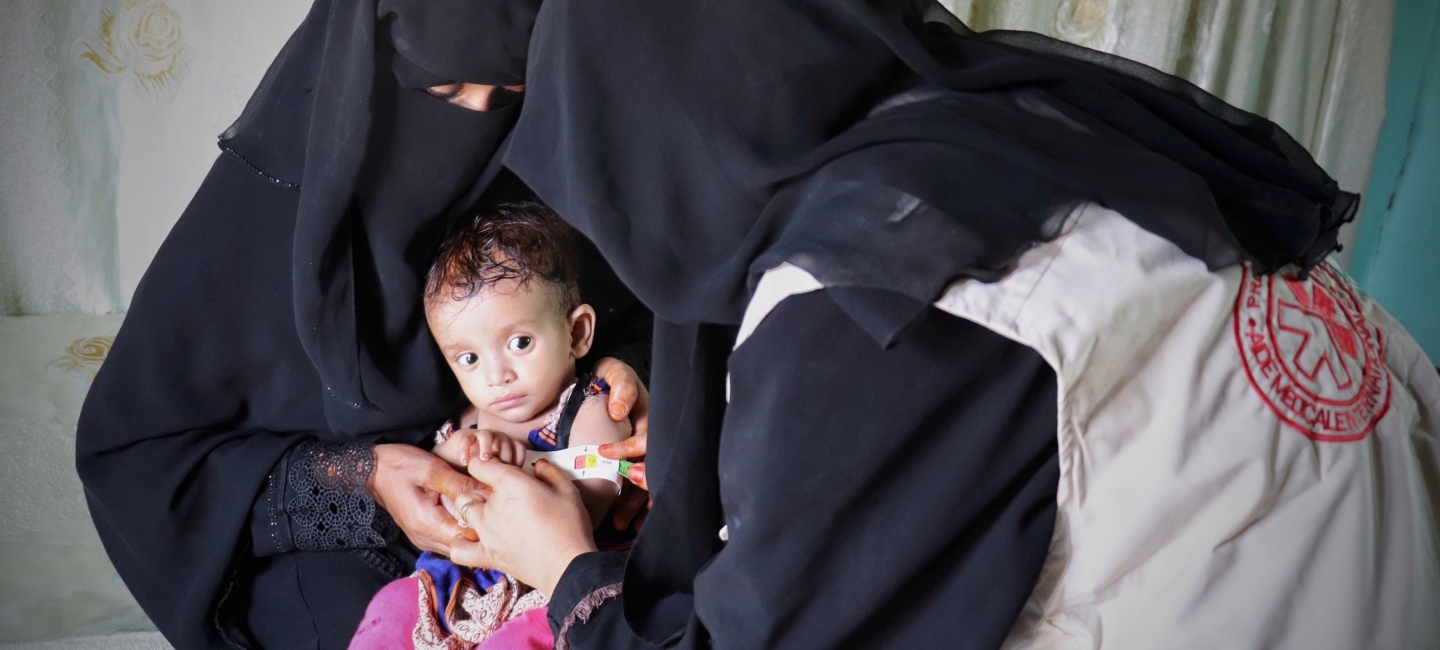
Clashes have flared up along Yemen’s west coast, particularly around the port town of Mokha, displacing nearly 200,000 people. This bout of violence has killed 959 people and injured more than 4,200 others, according to the World Health Organization (WHO).
As humanitarian needs spike and access to healthcare becomes increasingly challenging, Première Urgence Internationale, the NGO of the last mile, remains fully operational in Yemen. From its Mokha and Hodeidah bases, the organisation continues to support 21 health facilities across the governorates of Taiz, Lahj and Hodeidah. Twenty of those facilities are operational.
Our teams have not ceased to provide healthcare and nutrition services, while responding to a cholera outbreak. Our therapeutic feeding centres in Mokha and Hays also remain operational. In September alone, Diarrheal Treatment Center in Hays reported 357 suspected cholera cases and 20 laboratory-confirmed cases.
Maintaining these services is critical as repeated displacement and precarious conditions, with individuals staying with host families, in tents or in makeshift shelters, increase the risk of disease outbreaks, including cholera, measles, malaria and dengue fever. This predicament is also taking a heavy psychological toll on affected communities.
“Recent events on Yemen’s west coast, particularly around our operational base in Mokha, are a stark reminder of how fragile and volatile the situation remains,” said Camille Saulnier, Country Director for Première Urgence Internationale in Yemen.
“Our priority is to maintain a vital link with affected communities. Thanks to the commitment and flexibility of our teams, our health facilities have quickly resumed treating children with malnutrition and providing primary healthcare. Keeping these frontline services as close as possible to communities is essential to meeting the critical needs of families.”
Despite rampant insecurity restricting access to health facilities, staff shortages and the suspension of some activities, Première Urgence Internationale continues to adapt its operations to keep serving affected communities.
Press contact: Juliette Maigné ([email protected]) at +33 7 83 42 57 19.