

illus-31
The crisis, its consequences, and key figures on the emergency in Cameroon
According to the United Nations Office for the Coordination of Humanitarian Affairs (OCHA), 3.3 million people will need humanitarian aid in Cameroon in 2025. 45% of them – or 1.5 million people – live in the Far North region alone. Among these people, there is a very high proportion of women, often heads of intergenerational families, and children, the most vulnerable populations.
The touching testimony of Kambo, displaced to Blangoua
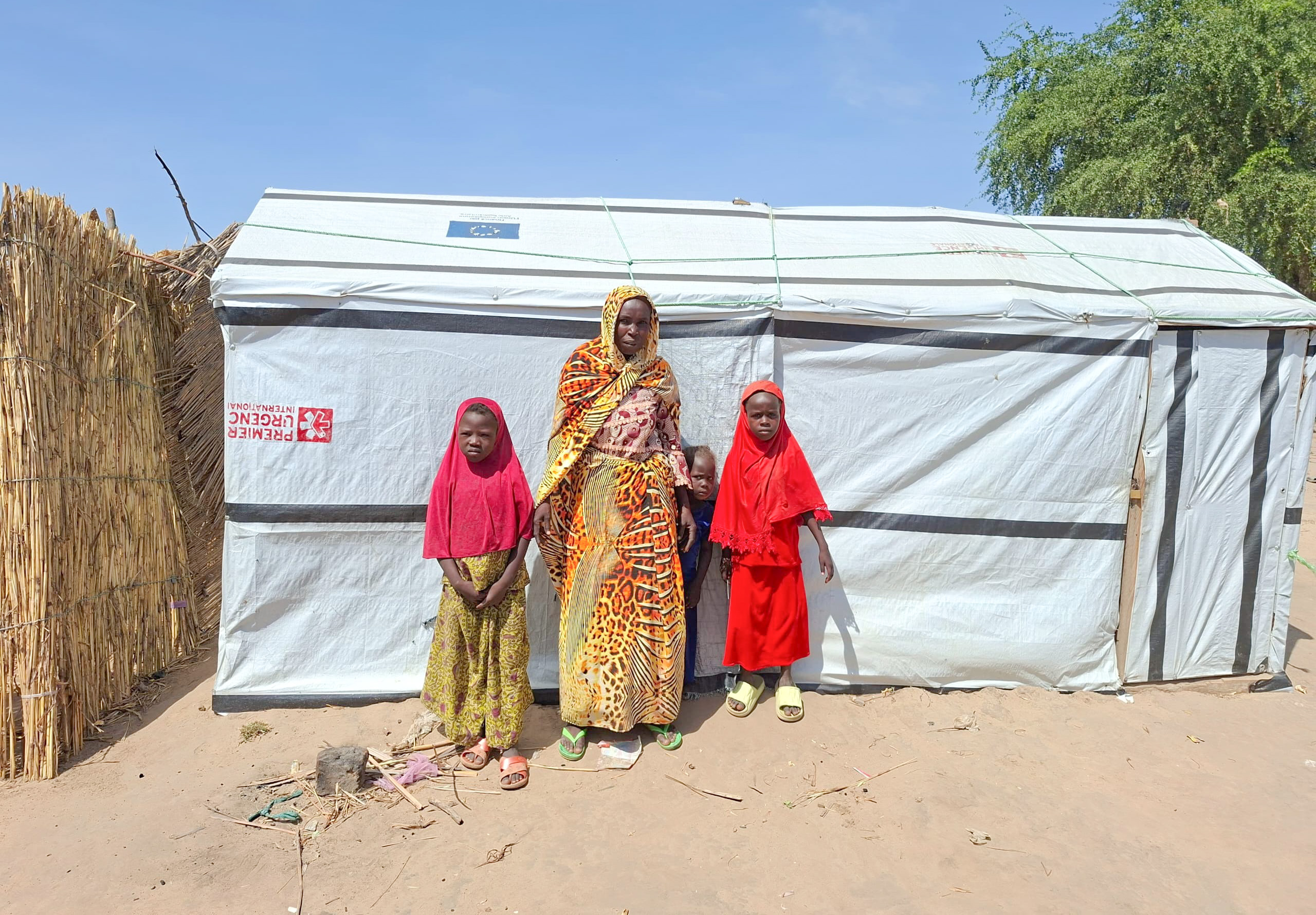
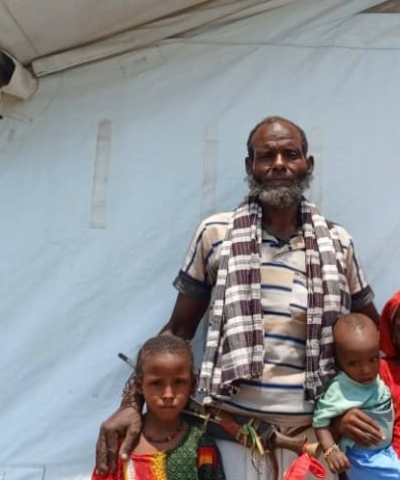
Kambo and three of her children in front of their emergency shelter, Blangoua, Logone and Chari Department, Far North Region, Cameroon, October 2025 | © Première Urgence Internationale.
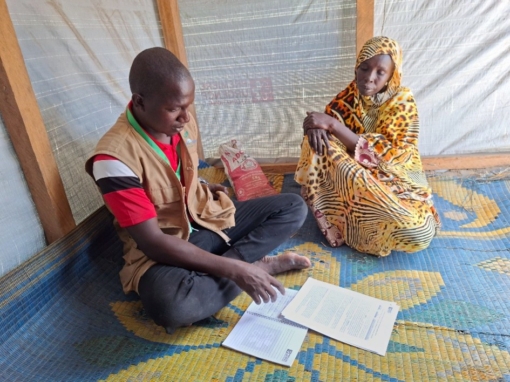
Kambo, 30, is one such person. Originally from the village of Souéram, she was forced to flee with her six children after an attack. She recounts her arrival in their new host community, Blangoua:
“We arrived from Soueram with nothing, sleeping outside exposed to the cold, rain, and snake bites. Some heads of households would go to work in the fields and come back with just enough to cook dinner or with money to buy food for the children.”
Her story highlights the immediate vulnerability and lack of resources to ensure the most basic survival.
Rapid Response Management (RRM) expertise
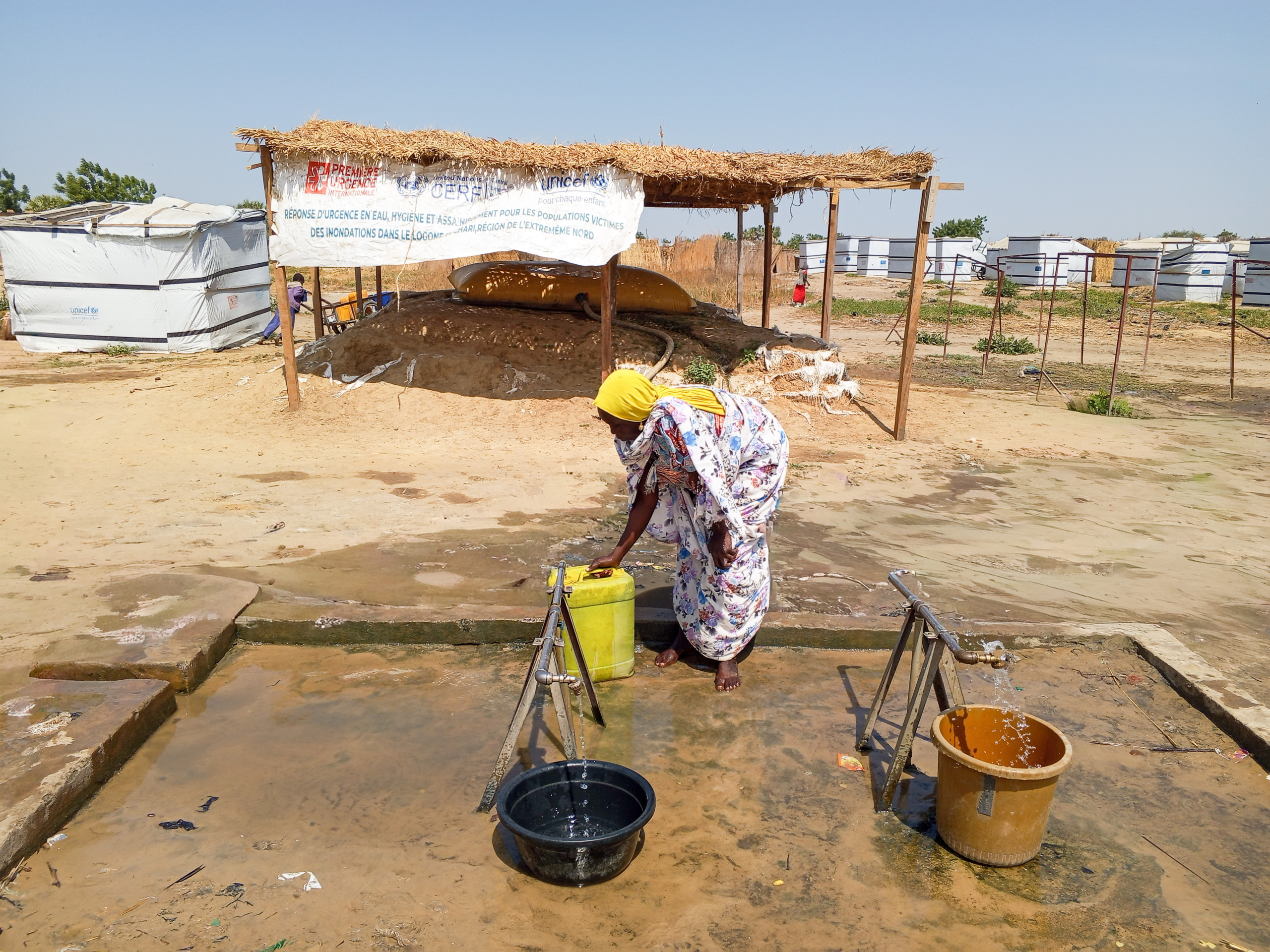
Water collection area available to internally displaced persons in Blangoua, Logone and Chari Department, Far North Region, Cameroon, November 2025| © Première Urgence Internationale
In response to an alert issued by the International Organization for Migration (IOM) on June 2, 2025, reporting an influx of people to Blangoua, mobilization was immediate.
The next day, our teams from Première Urgence Internationale went to the site. In collaboration with our local partner Tammounde Speranza, as well as Solidarités International and Serbowel Humanitaire, we conducted a rapid needs assessment as part of the Rapid Response Mechanism (RRM).
In total, 149 households, representing 1,142 people, were identified. Just eleven days later (from June 14 to 27, 2025), our teams were deployed to provide concrete and targeted assistance, responding to the emergencies identified for families like Kambo’s.
Concrete assistance to rebuild daily life
Kambo explains how this assistance has transformed his living conditions:
“I benefited from Première Urgence Internationale’s support through the distribution of water, hygiene, and sanitation (WHS) kits and kits for building emergency shelters. These shelter kits contained everything we needed (slats, rafters, tools, etc.), and we even received financial support for labor.
Today, we have a decent shelter where we are safe. We also have access todrinking water and latrines and showers that have been built. Our children and we also use the washing areas, which makes our daily lives easier.”
Key figures on the impact of our interventions in Blangoua following the June 2 alert regarding the displacement of 149 households:
- Shelter: 83 households received comprehensive emergency shelter assistance.
- Water and hygiene: 94 households received essential WASH kits.
- Sanitation: 11 emergency latrine blocks were built for approximately 1,100 people, limiting open defecation and reducing the risk of epidemics.
- Access to drinking water: Two bladders (flexible reservoirs) were installed, securing the drinking water supply for 5,000 people.
This crucial aid was made possible thanks to the support of the European Union and UNICEF.
Financial support