

News
Afghanistan: A safe delivery
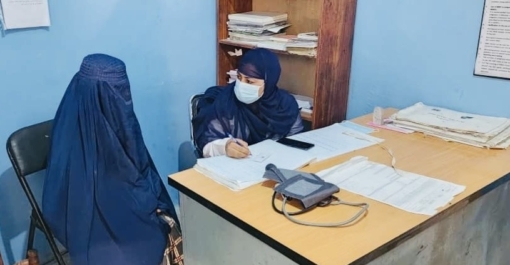
Saeda*, aged 31 and from a remote village in Nuristan province, began her journey to motherhood with great determination. In this isolated area, where access to healthcare remains difficult, she regularly had to walk for several hours to attend her prenatal appointments at the Koorder health center, the only one in her district.
Publié le 16/10/2025 | Temps de lecture : 6 min
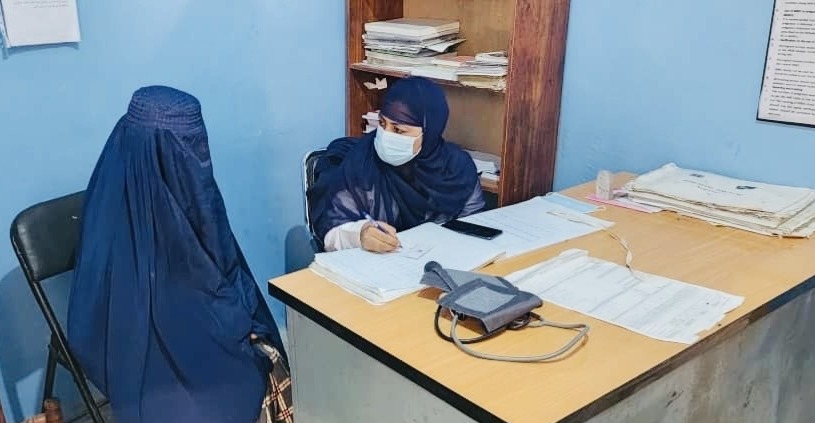
During childbirth, after more than eight hours of labor, her condition became critical. Thanks to the referral system set up by Première Urgence Internationale, she was quickly and safely transferred to the nearest provincial hospital, which probably saved her life and that of her baby. Two days later, she returned to the health center with a smile on her face and her daughter Aysha in her arms, who had come for her first vaccination. Saeda was also able to receive additional care, including postnatal follow-up, nutritional advice, recommendations for exclusive breastfeeding, and hygiene promotion.
“I feel safe and supported,” Saeda said. “They have been with us every step of the way— from prenatal care to referral to postnatal follow-up. We are grateful for the care and kindness we have received.” Her family also expressed their gratitude for the responsiveness and kindness of the staff. Thanks to the coordination of the referral system and postnatal follow-up, Aysha has started her life in the best possible conditions, and Saeda has begun her journey into motherhood with confidence and support.
How can access to childbirth care be improved in remote areas of Afghanistan?
Afghanistan has been experiencing a major crisis for several years, with nearly 29 million people in need of emergency humanitarian assistance (OCHA 2023). Since August 2021, living conditions have deteriorated under the combined effects of drought, earthquakes, climate change, economic constraints, and population movements on the border with Pakistan.
In the east of the country, the province of Nuristan symbolizes these difficulties. Mountainous and difficult to access, especially in winter, it is poorly covered by humanitarian actors and under-equipped in terms of infrastructure and essential services. Women and children are particularly exposed to increased vulnerability. Recent assessments conducted by OCHA in 2024 classify Nuristan as a top priority, with up to 80% of the population in need of healthcare and 60% requiring nutritional support.
In this context, Première Urgence Internationale, with the support of Stand Speak Rise Up!, is implementing the SHINE project (Strengthening Health Integration, Nutrition, and Empowerment in Nuristan), which aims to improve access to maternal and child health services, nutrition, hygiene, and psychosocial support. The intervention targets three health centers to improve the quality and continuity of essential care, particularly for vulnerable women.
Thanks to this partnership, Stand Speak Rise Up! and Première Urgence Internationale are working together to strengthen access to essential care for the most isolated populations, in accordance with humanitarian principles and local dynamics.
In May 2025, one month after the launch of activities, the following results had already been achieved:
- 26 births assisted by qualified health professionals ;
- 37 women who benefited from two prenatal consultations ;
- 87 pregnant and breastfeeding women who benefited from individual and group psychosocial support sessions ;
- 645 pregnant and breastfeeding women and children under five had been screened for malnutrition in health centers ;
- 87 children under five and 81 pregnant and breastfeeding women had been admitted for treatment for acute malnutrition.
More about
Financial support