


Press release
Gaza: Israeli restrictions on engine oil are crippling the humanitarian response
Gaza, 23 October 2026 — Israeli authorities’ restrictions on engine oil are severely constraining the humanitarian response, increasing operational pressures and threatening the continuity and reach of life-saving services, warns the Association of International Development Agencies (AIDA) and the Palestinian Non-Governmental Network (PNGO).
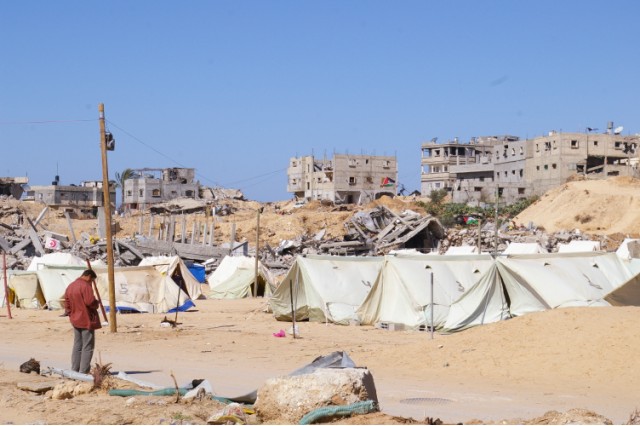
Residual stocks of engine oil are nearly depleted after three years of severe restrictions on humanitarian aid imposed by Israeli authorities. As a result, the price of engine oil inside Gaza has skyrocketed to $900 for a single litre while a few hundred meters away the price inside Israel is only $10 per litre. NGOs are being priced out of the little oil that remains, at a time when funding shortfalls are already forcing humanitarian actors to scale back despite immense and growing needs.
“Repeated engagements with Israeli authorities have yielded nothing, this blockage is a political decision with profoundly human consequences. Palestinians in Gaza pay the price of global inaction,” says Athena Rayburn, AIDA executive director. “Israeli authorities must immediately permit the entry of engine oil at the scale needed to sustain humanitarian operations. Entry though commercial channels must also be restored to lower and stabilise the cost and ease the burden on aid budgets.”
Israeli authorities cut off Gaza’s electricity supply in October 2023, leaving generators and solar panels as the main sources of power. X-ray machines, intensive care units, sewage treatment and desalination plants, ambulances, blood banks, incubators and dialysis units require uninterrupted electricity from generators. Solar energy cannot support these essential services, and its functionality also drops significantly in winter, when shorter daylight hours further limit power generation.
Generators are failing from the shortage of engine oil, and this, combined with a fuel shortage is forcing aid agencies to choose which lifesaving services to prioritise. AIDA conducted a survey of 20 INGOs in July and found that organisations had decreased the average generator run-time by half to preserve the small amounts of engine oil available to them. Healthcare providers have cut lighting and heating to protect the cold chain for insulin and vaccines. One medical INGO has resorted to packing medicines in ice-filled cooler boxes to stop them from expiring overnight when power from solar panels drops.
One INGO reported that their water pumping and distribution had fallen from 10,000 to 5,000 households, while another will need to suspend their nutrition monitoring activities because too many of their vehicles have become inoperable. By September, about 70% of hospital generators were out of service because of the scarcity of engine oil, and WHO diesel supplies to more than 20 health facilities stopped due to a lack of funding according to medical INGOs in Gaza.
As the occupying power, Israel is obligated to ensure the population has the essentials of daily life, including functioning hospitals. Denying the means to power hospitals and keep medicines viable is a violation of Israel’s obligations as the occupying power under international humanitarian law.
This is a policy choice, not a logistical failure. Israel must let engine oil in. Keep the generators running and restore access to electricity.
Notes to editors
- Legal framework: Articles 55, 56 and 59 of the Fourth Geneva Convention oblige an occupying power to ensure the food and medical supplies of the population, to maintain hospitals and public health services, and to agree to and facilitate relief operations. In its Advisory Opinion of 22 October 2025, the International Court of Justice made clear that an occupying power may not invoke security reasons to suspend all humanitarian activities.
- Data: Figures on vehicles, generators and programme impact come from an AIDA survey of 20 INGOs working in Gaza, carried out on 18–24 July 2026. They are minimums reported by respondents, not sector-wide totals.
- Palestine Chronicle, “Gaza Hospitals Cut Services as Fuel Runs Out, Patients Blocked from Leaving,” Palestine Chronicle, September 21, 2026,
- “70% of Hospital Generators in Gaza Out of Service: Health Ministry,” video, Anadolu Agency, via Reuters Connect, September 16, 2026,
- Since October 2023, the power lines supplying Gaza with central electricity have been cut off by Israeli authorities. The only remaining power plant in Gaza has been unable to operate due to infrastructural damage and restrictions on access to fuel by Israel. This has created dependency in Gaza on generators and solar power. With winter fast approaching, solar output will roughly halve just as the need for heat and light grows. Generators cannot run without fuel and engine oil, yet both remain on Israel’s dual-use lists and are routinely denied entry by Israel.