


The current situation in the Democratic Republic of the Congo
What is the current situation in the DRC?
For decades, the Democratic Republic of the Congo (DRC) has faced a multidimensional crisis marked by chronic insecurity, protracted armed conflict and fragile state institutions.
In the eastern part of the country, particularly in North Kivu, South Kivu and Ituri, violence has intensified significantly with the rise of the March 23 Movement (M23), an armed group that now controls strategic mineral-rich areas and administers parts of the territory.
This situation unfolds within a complex regional context involving neighbouring countries, particularly Rwanda and Uganda, and is fuelled by competition over natural resources such as coltan, gold and copper.
Against the backdrop of armed conflict, the DRC is also facing a major public health emergency with its 17th Ebola virus disease outbreak, declared in May 2026. The outbreak is caused by the Bundibugyo strain, for which no approved vaccine currently exists. It was declared a Public Health Emergency of International Concern (PHEIC) by the World Health Organization (WHO). As of 23 June 2026, the Congolese Ministry of Health had reported 1,094 confirmed cases and 277 deaths.
What is the origin of the conflict in the DRC?
The conflict affecting the DRC has persisted for decades. It has led to the collapse of many public services and a strong humanitarian presence, while three parallel peace processes continue to struggle to deliver lasting results.
The M23 is one of the main actors in the conflict. It controls strategic mining areas, making the exploitation of natural resources one of the key drivers of violence. Rwanda has recently acknowledged security cooperation with the M23, arguing that it aims to protect Tutsi communities (Banyamulenge) allegedly threatened by Hutu armed groups linked to the 1994 genocide.
This security and ethnic narrative is also intertwined with broader geopolitical competition. The United States is believed to indirectly support Rwanda and the M23 in an effort to counter China’s growing influence in the mining sector. Meanwhile, the Congolese armed forces (FARDC) rely on local militias, a strategy that has contributed to serious abuses against civilians.
Violence also continues in other regions, particularly Ituri and North Kivu, where ethnic tensions involve Ugandan interests. The Allied Democratic Forces (ADF), an armed group affiliated with the Islamic State and allied with the M23, are being fought by a joint Congolese-Ugandan military coalition, illustrating the increasingly regional nature of the conflict.
How is the crisis in the DRC affecting neighbouring countries?
In May 2026, the DRC declared its 17th Ebola virus disease outbreak, which presents several particularly worrying characteristics.
The outbreak is caused by the Bundibugyo strain, a rarer variant for which there is currently no licensed vaccine or specific treatment, unlike the Zaire strain.
Given the seriousness of the situation, the World Health Organization (WHO) declared the outbreak a Public Health Emergency of International Concern (PHEIC) on 17 May 2026, calling for stronger international coordination. At the same time, the national risk level was rapidly raised from “high” to “very high.”
On 23 June 2026, the Congolese Ministry of Health reported 1,094 confirmed cases, including 277 deaths. Transmission has been recorded in several provinces, notably Ituri, North Kivu and South Kivu.
Cross-border transmission has also been confirmed, particularly in Uganda, where 19 cases, including two deaths, have been reported.
What is the humanitarian situation?
The humanitarian situation is marked by the presence of large camps for internally displaced people in eastern DRC. Alongside the security crisis, the country is now facing a new public health emergency triggered by an outbreak of Ebola virus disease caused by the relatively little-known Bundibugyo strain.
In May 2026, the World Health Organization declared a Public Health Emergency of International Concern in response to the rapid spread of the virus, which causes a severe haemorrhagic fever. The main epicentre of the outbreak is located in Ituri Province, in eastern DRC.
At present, there is no vaccine or specific treatment available for this strain of the virus. Medical care therefore focuses on treating symptoms and supporting patients while their immune system fights the infection. The case fatality rate is estimated at between 25% and 50%. Although this is clinically lower than that of some other Ebola strains, it does not necessarily mean that the disease is less severe or that the outbreak is less dangerous.
What are the main obstacles to delivering humanitarian aid in the DRC?
Faced with a disease capable of devastating entire communities—as witnessed during the deadly 2014 Ebola epidemic—combating misinformation is essential to protecting lives. Rumours and false information spread rapidly within communities and hinder the work of healthcare workers.
Our community engagement activities play a vital role in addressing misinformation and sharing clear, reliable information on symptoms, modes of transmission, prevention measures and the importance of seeking medical care as early as possible.
The response to this outbreak has now entered a decisive phase. Without rapid, large-scale action, the risk of further spread—including across borders—remains extremely high.
Beyond the Ebola outbreak itself, humanitarian operations are also severely affected by insecurity. Aid workers are frequently targeted by violent incidents, particularly in North Kivu and South Kivu, where kidnappings and armed attacks on humanitarian vehicles are common.
Poor road conditions, deteriorating airport infrastructure and damaged bridges across much of the country also make humanitarian access particularly challenging. During the rainy season, some areas become completely inaccessible, delaying the delivery of life-saving assistance.
How is Ebola transmitted?
Ebola virus disease is not an airborne disease. It is transmitted through direct contact with the bodily fluids (such as blood, saliva or sweat) of an infected person, whether alive or deceased. Transmission can also occur indirectly through contact with contaminated objects or surfaces.
People infected with the virus are not contagious until they develop symptoms. However, once symptoms appear, they remain infectious as long as the virus is present in their bloodstream.
Healthcare workers are particularly exposed to the virus and are at increased risk of infection when caring for patients if appropriate infection prevention and control measures are not in place.
People who die from Ebola are at their most contagious at the time of death and may remain infectious for several days afterwards.
Traditional funeral and burial practices, during which relatives often have direct physical contact with the deceased, are an integral part of Congolese culture but can significantly increase the risk of transmission.
Basic hygiene measures are essential to reduce the risk of infection. These include washing hands regularly, avoiding contact with people showing symptoms of the disease, and limiting the handling or consumption of bushmeat.
Healthy, intact skin provides an effective barrier against infection.
Healthcare workers must take additional precautions to avoid any contact with patients’ blood or bodily fluids, as well as contaminated objects and surfaces.
What are the symptoms of Ebola?
The incubation period—the time between infection and the onset of symptoms—ranges from 2 to 21 days.
The disease usually begins suddenly with fever, fatigue, general weakness, muscle pain, headache and sore throat.
As the disease progresses, patients may develop vomiting, diarrhoea, abdominal pain, skin rashes, as well as kidney and liver impairment.
Some patients also experience internal and external bleeding, including blood in vomit or stools and bleeding from the nose, gums or vagina.
The disease may also affect the central nervous system, causing confusion, irritability or altered mental status.
How is Ebola treated?
There is currently no approved vaccine or specific treatment for the Bundibugyo strain responsible for the ongoing outbreak.
Treatment is therefore supportive and focuses on relieving symptoms while helping the patient’s body fight the infection. The case fatality rate for this strain is estimated at between 25% and 50%. Although this is clinically lower than for some other Ebola strains, the Bundibugyo variant remains a major concern because it is less well understood.
Early diagnosis and prompt supportive care—including rehydration, correction of electrolyte imbalances and management of organ failure—significantly improve a patient’s chances of survival.
This is why rapid detection and early management of suspected cases are critical to containing the outbreak.
What activities does Première Urgence Internationale carry out in the DRC?
Present in the Democratic Republic of the Congo since 2001, Première Urgence Internationale operates in four provinces, supporting more than 30 health centres and three general hospitals. Our teams also deploy emergency medical responses in hard-to-reach areas, providing primary healthcare, maternal and neonatal health services, protection, psychosocial support, and screening and treatment for severe acute malnutrition.
Around Goma, in North Kivu, Première Urgence Internationale is now one of the leading emergency responders in health, nutrition and protection, operating across around ten sites hosting internally displaced people.
Following the declaration of the new Ebola virus disease outbreak in May 2026, our teams have been working tirelessly to contain the spread of the virus and protect vulnerable communities. We stand ready to rapidly scale up our response.
Immediately after the public health emergency was declared, our first priority was to ensure the safety of our national staff before progressively resuming activities. At the same time, emergency funding mechanisms are being activated to enable a rapid response.
How is Première Urgence Internationale responding to the Ebola outbreak in the DRC?
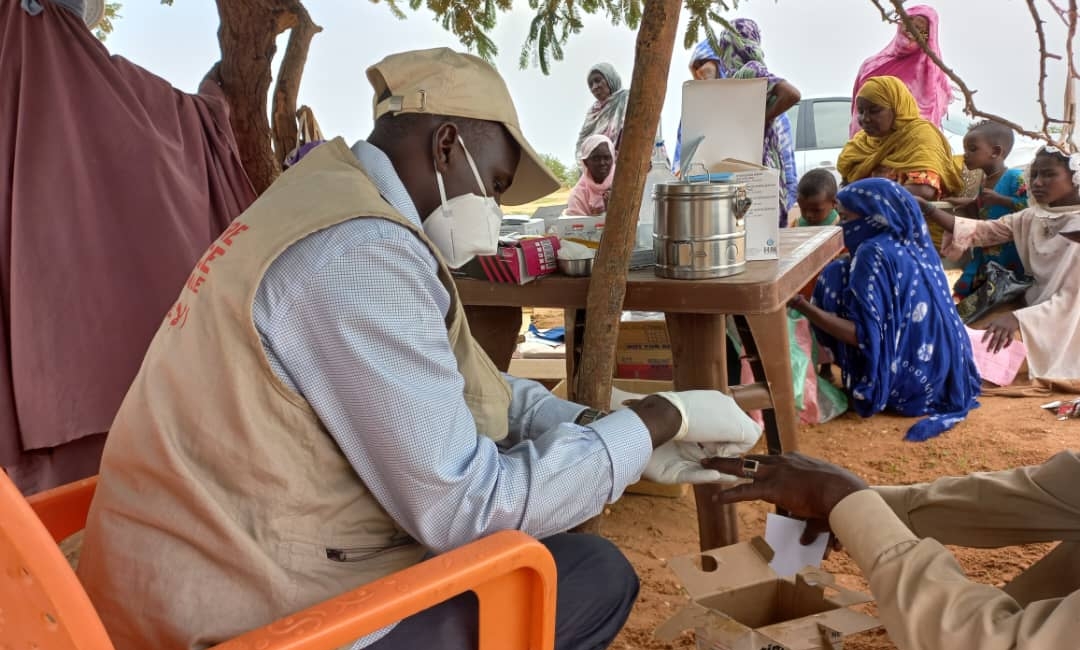
Première Urgence Internationale is actively involved in the response, particularly by screening suspected cases. People presenting symptoms are referred to specialised Ebola treatment centres for appropriate care.
We have also established isolation areas within health facilities to reduce the risk of transmission.
Our teams support infection prevention and control (IPC) measures as well as water, sanitation and hygiene (WASH) activities. This includes providing personal protective equipment (PPE), disinfectant solutions, sprayers, handwashing stations and other essential supplies to the health facilities we support, while also training healthcare workers on infection prevention and control.
We work in close coordination with the national health authorities, the Health Cluster and other response partners to ensure that our interventions remain aligned with national protocols and complement the broader humanitarian response.
In addition, Première Urgence Internationale strengthens epidemiological surveillance by reinforcing community-based and health facility alert systems, improving data collection, supporting early case detection and providing sampling equipment.
Has Première Urgence Internationale responded to Ebola outbreaks in the DRC before?
This is not the first time Première Urgence Internationale has responded to a public health emergency of this scale. Our teams have taken part in the response to several Ebola outbreaks in the Democratic Republic of the Congo.
Our approach, centred on strengthening the health system and engaging communities, has repeatedly proven effective in helping contain the spread of the virus while building long-term local resilience.
In 2019, Première Urgence Internationale played a key role in identifying and ensuring the early isolation of the first Ebola case detected in Goma, North Kivu.
We also strengthened infection prevention and control measures across the area by supporting 21 health facilities, notably through mentoring programmes for healthcare workers.
These efforts helped prevent the outbreak from spreading throughout the city of Goma.
Working closely with the health authorities and our partners, we are closely monitoring the evolution of the outbreak and actively contributing to the response.
Thanks to our Emergency Fund, we were able to rapidly mobilise initial resources to provide our teams with personal protective equipment (PPE), an essential prerequisite for responding safely.
How can you help people affected by the crisis in the Democratic Republic of the Congo?
To respond effectively to the needs of people affected by the conflict and the Ebola outbreak in the Democratic Republic of the Congo, making a financial donation is the most effective way to help.
Here’s why we encourage financial donations:
Make a financial donation: the most effective way to support humanitarian action
Making a secure online donation is the fastest way to support our emergency response.
Rapid response: Financial donations enable us to purchase essential supplies—including medicines, clean water, shelter materials and medical equipment—directly in neighbouring countries or on local markets, where they are needed most.
Flexibility: Humanitarian needs can change rapidly. Financial contributions allow us to reallocate resources immediately, ensuring that assistance always matches the most urgent priorities.
If no dedicated appeal has been launched for this emergency, your donation will support our Emergency Fund.
The Emergency Fund is essential to our independence. It allows our teams to respond within the first hours of a crisis, before international funding becomes available.
Why doesn’t Première Urgence Internationale accept in-kind donations?
Although well intentioned, sending clothing, food or other goods from abroad can unintentionally hamper humanitarian operations. This reflects the humanitarian principle of “Do No Harm.”
High transport costs: Shipping goods internationally often costs more than the items themselves. Those resources can have a far greater impact when invested directly in medical care and humanitarian assistance on the ground.
Supporting local economies: Large quantities of donated goods can undermine local businesses that are trying to recover. Purchasing supplies locally helps strengthen the economy and supports communities’ recovery.
Meeting actual needs: Humanitarian needs are highly specific. Medical supplies, food and hygiene items must comply with local standards and match the context. Unsolicited donations often create logistical bottlenecks that delay life-saving assistance.
Respecting people’s dignity: Purchasing culturally appropriate goods locally allows affected communities to choose products suited to their needs and preserves their dignity.
For companies
If you represent a company, you can support Première Urgence Internationale through corporate philanthropy or skills-based volunteering.
To discuss the most suitable partnership for your organisation, please contact our Donor Relations team at [email protected].
How can I donate to support our work in the DRC?
Donate online
You can make a secure donation directly through our online donation platform to support our humanitarian response.
Our Emergency Fund enables us to respond rapidly and effectively to the needs of the most vulnerable populations.
This financial independence allows our teams not only to respond to high-profile emergencies but also to intervene in overlooked crises that receive little international attention.
Ninety-four per cent of our funds are dedicated directly to our social missions.
Your donations enable us to prepare for crises in some of the world’s most fragile regions, respond rapidly when emergencies strike, and remain alongside affected communities throughout recovery and reconstruction.
Donate by cheque
You can also support our work by cheque.
Please make your cheque payable to Première Urgence Internationale and send it to:
Première Urgence Internationale
2 rue Auguste Thomas
92600 Asnières-sur-Seine
France
If you would like your donation to support operations in the Democratic Republic of the Congo specifically, please indicate “DRC” when sending your donation.
Did you know?
In France, donations to Première Urgence Internationale are tax deductible. Individual donors may benefit from a tax reduction in accordance with current French legislation.
For donations exceeding €10,000, please contact our Donor Relations team at [email protected].
Première Urgence Internationale maintains rigorous financial management and internal control procedures, which are regularly audited by its institutional donors.
Our annual financial statements are independently audited each year by Deloitte & Associés, our statutory auditor, and are consistently certified without qualification.