

News
Ending child malnutrition in South Kivu to ensure long-term protection for every child
In the Democratic Republic of Congo, and particularly in Fizi territory, South Kivu, ongoing insecurity and population displacement are depriving thousands of families of stable access to food and healthcare. To address this emergency, Première Urgence Internationale has been implementing an integrated nutrition response since 2024 to radically transform the health situation of the most vulnerable populations.
Publié le 27/03/2026 | Temps de lecture : 9 min
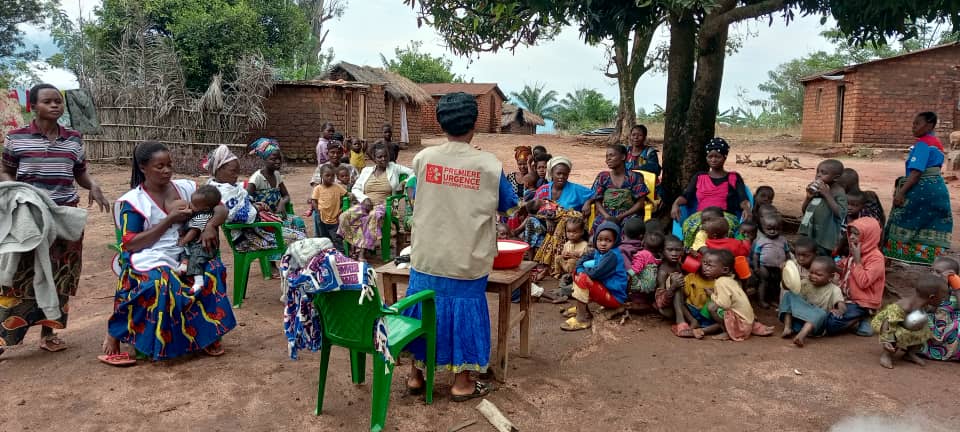
How to treat severe acute malnutrition in the Fizi district?
The project does more than just distribute aid; it rebuilds a robust health system. The goal is clear: zero deaths from hunger. To achieve this, we focus on four pillars:
- Increasing the capacity of health facilities to manage severe cases;
- Improving prevention at the household level;
- Strengthening the referral system between peripheral clinics and the hospital;
- Reducing mortality linked to severe acute malnutrition.
A strengthened health system for full territorial coverage
Technical expertise is the foundation of our work. To ensure that change takes deep root, Première Urgence Internationale invests heavily in training local stakeholders.
Training: the key to success
To date, 13 healthcare providers have been trained in state-of-the-art protocols for managing severe acute malnutrition. At the same time, 60 community health workers have become the sentinels of their own villages. Thanks to their mastery of the Mid-Upper Arm Circumference (MUAC) measurement, they provide constant monitoring and early screening directly in homes.
Undeniable results in numbers
This rigorous organization has enabled the screening of 34,347children aged 6 months to under five years old.
- 2,333 children admitted to Outpatient Therapeutic Feeding Units without complications (OTFU);
- 208 children hospitalized in the Inpatient Therapeutic Feeding Unit with complications (ITFU);
- a 92% recovery rate, a result that attests to the complete effectiveness of the protocols implemented in the field.
Community Engagement: Why Is Prevention Key?
What are the causes of malnutrition in South Kivu? Beyond the lack of food, it is often the delay in treatment that proves fatal. To address this issue, our teams conducted over 4,320 home visits. This extensive network allows us to detect warning signs before complications arise.
In addition, we have educated 5672 people on infant and young child feeding practices. The goal is to impart knowledge that will remain with families long after the project ends, thereby ensuring lasting protection against relapse.
Lebon’s story: a life transformed by access to care
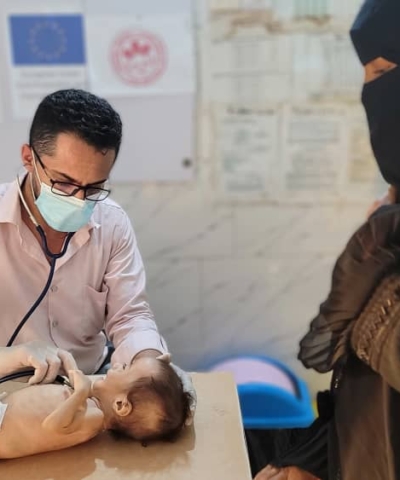
In Kananda, little Lebon’s journey illustrates the vital impact of our presence. Having lost his mother and raised by his grandmother in extreme poverty, Lebon arrived at the Intensive Therapeutic Nutrition Unit (ITNU) in Fizi in an alarming condition: severe edema, anorexia, and skin lesions.
Thanks to an eight-day hospital stay, provided entirely free of charge, followed by six weeks of rigorous outpatient follow-up, Lebon has regained his health. His weight, height, and upper arm circumference are now within normal ranges.
“I was starting to lose hope,” says his grandmother, “but today I can see with my own eyes the value of your work. Thank you to the teams at Première Urgence Internationale.”
Encouraging results
Over the months, dozens of children suffering from severe acute malnutrition with complications have been stabilized, transferred to outpatient care, and subsequently declared cured. The return of appetite, the disappearance of edema, and gradual weight gain attest to the effectiveness of localized therapeutic support.
Home visits ensure continuity, prevent relapses, and reinforce good dietary practices.
In Fizi, combating malnutrition means acting quickly, working closely with families, and sustainably strengthening local capacities. Because no child should risk their life due to a lack of access to essential nutritional care.
Thanks to support from the Foreign, Commonwealth and Development Office (FCDO), Première Urgence Internationale has been implementing an integrated nutrition response in the Fizi and Nundu health zones since 2024, sustainably strengthening the resilience and protection of the most vulnerable communities affected by conflict in eastern DRC.
More about:
- Our missions in the Democratic Republic of Congo
- Our expertise in health
- Our expertise in protection
- Our expertise in nutrition
- Support our global initiatives
Financial support