

News
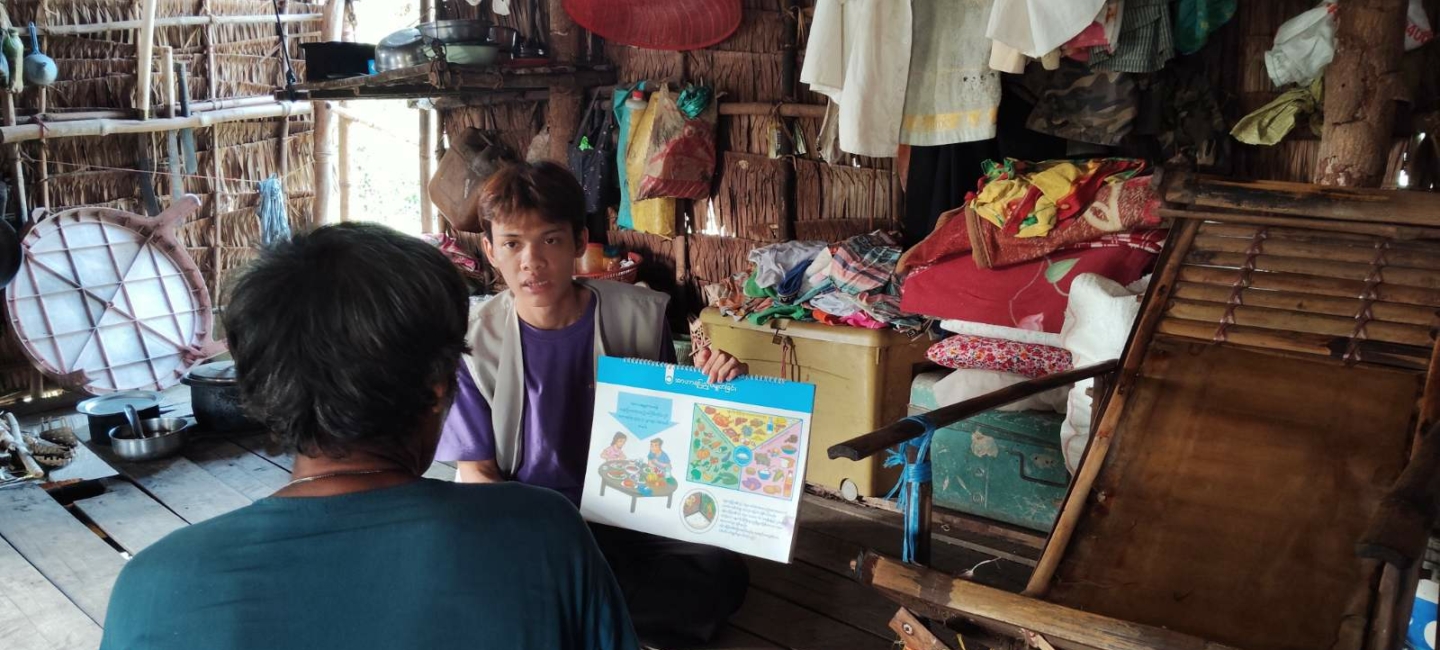
U Kan Htay: A story of resilience, support, and hope at 69
At 69, U Kan Htay embodies the strength of community in the face of adversity. A resident of Seikkyikanaungto, a remote village in Myanmar's Yangon region, he tells us how targeted nutritional support has transformed his life as a patient living with HIV
Publié le 13/01/2026 | Temps de lecture : 6 min
A daily life affected by the economic crisis
Before 2021, U Kan Htay supported himself by working multiple jobs: laborer, pedicab driver, and betel* seller. However, the decline of the local economy made daily survival precarious for this man living alone.
“Life was manageable before 2021, but everything became much more difficult after the local economy collapsed,” he says.
The combination of care and nutrition
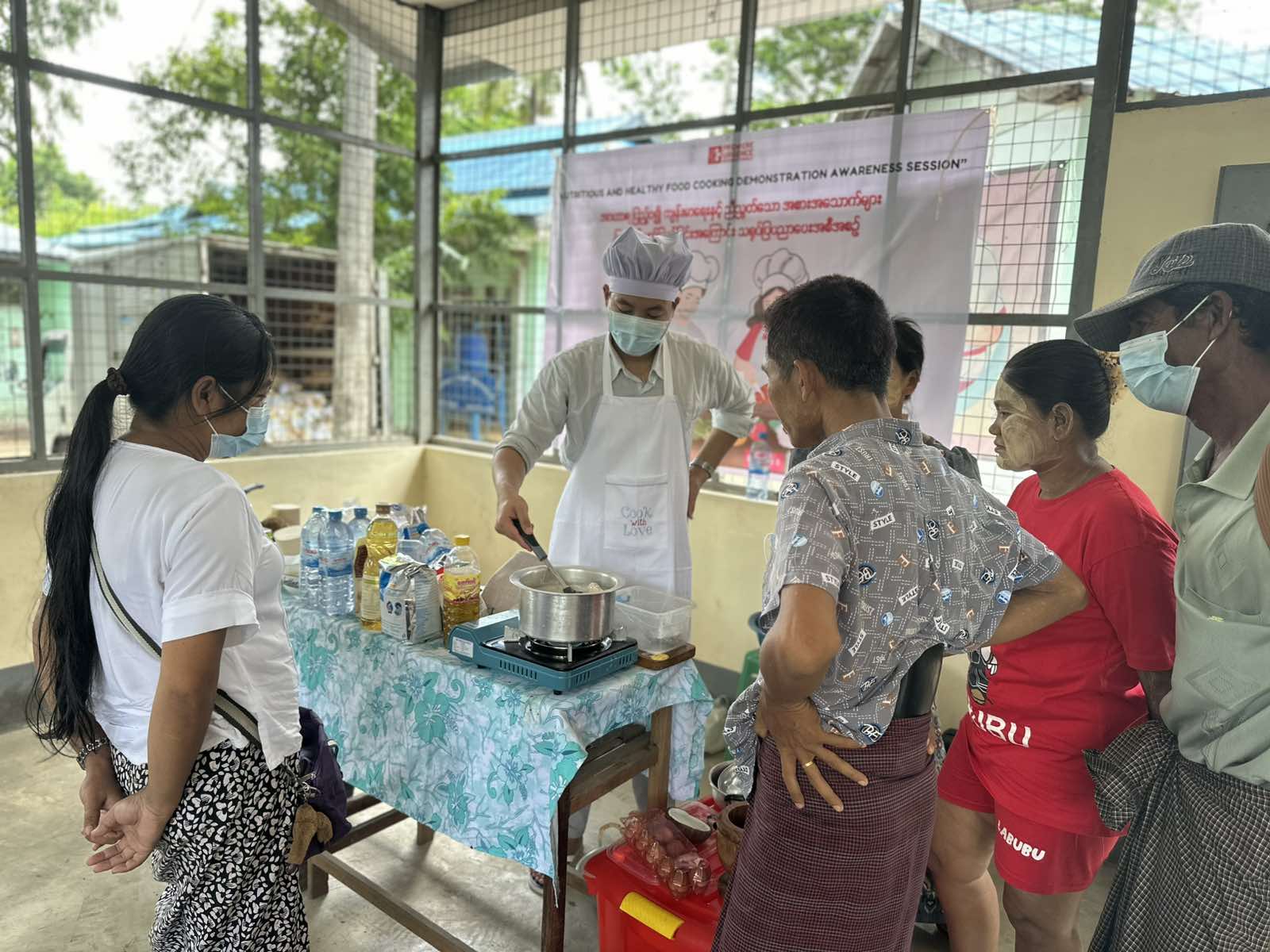
Cooking Demonstration Awareness Session – © Première Urgence Internationale
In May 2021, U Kan Htay’s fate crossed paths with that of Première Urgence Internationale. Thanks to the support of the World Food Programme (WFP), he joined a nutritional support program specifically designed for people living with HIV (PLHIV).
This program is based on an essential medical pillar: antiretroviral therapy (ART), which he began rigorously in May 2015. To accompany this heavy treatment, Première Urgence Internationale set up a nutritonal support system, enabling U Kan Htay to consume quality food, which is essential for the drugs to be effective.
Concrete results: Changes in body mass index (BMI)
Première Urgence Internationale’s expertise is not limited to the distribution of aid; it is based on rigorous medical monitoring. The figures testify to the success of the intervention:
- May 2021: Weight of 47.9 kg for a BMI (Body Mass Index) of 18.02, indicating underweight.
- April 2025: Thanks to regular nutritional support and health education sessions, his weight increased to 49.7 kg, reaching a BMI of 18.7, thus stabilizing his overall health.
More than just nutritional aid
Beyond the material aspect, U Kan Htay benefited from Première Urgence Internationale’s network of volunteer peer educators. These knowledge-sharing sessions enabled him to understand the mechanisms of nutrition adapted to ART treatment.
“My life would have been very difficult without this support. The knowledge-sharing sessions also helped me understand how to eat nutritiously to stay healthy,” he explains gratefully. His story shows that rapid and consistent assistance is key to restoring dignity and health to the most vulnerable.
* Betel (Piper betle) is a climbing plant widely used in Southeast Asia; its leaves, once prepared with areca nuts (betel nuts), are traditionally chewed.
More about
Financial support