

News
The strength of the rapid response mechanism in crisis zones
In Awash, in the Afar region of Ethiopia, the lives of 15-year-old Rahma and her family were turned upside down on September 27, 2024. A devastating earthquake struck Awash Fantalle Woreda, destroying their home, damaging infrastructure, and forcing the closure of the sugar factory where her mother worked, the family's sole breadwinner since the death of her husband.
Publié le 12/11/2025 | Temps de lecture : 10 min
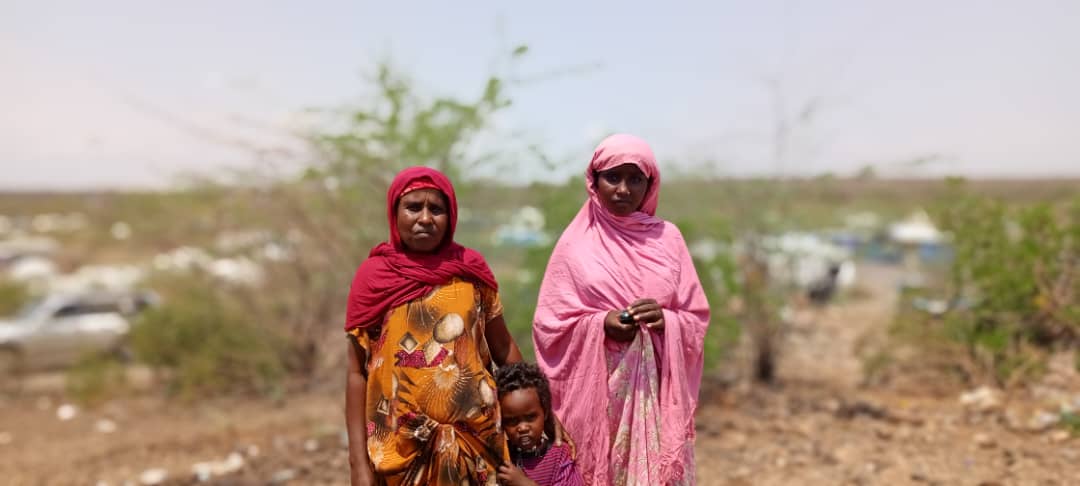
Without shelter or income, the family had to move to the Dadido camp for displaced persons, an overcrowded place where living conditions are precarious. Rahma, who was in fourth grade, had to put her dreams of studying on hold to help her mother.
How can cholera be combated in camps for displaced people?
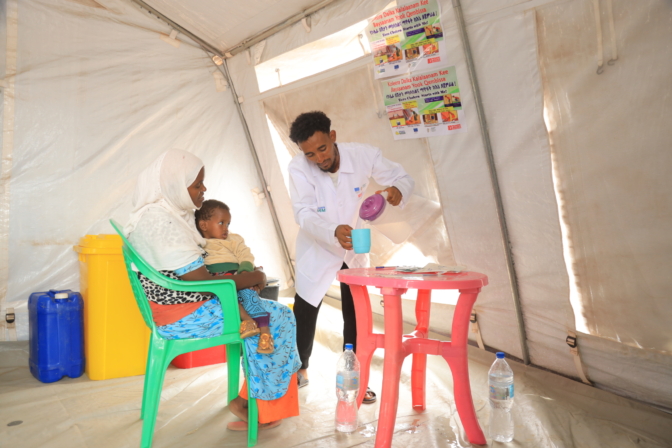
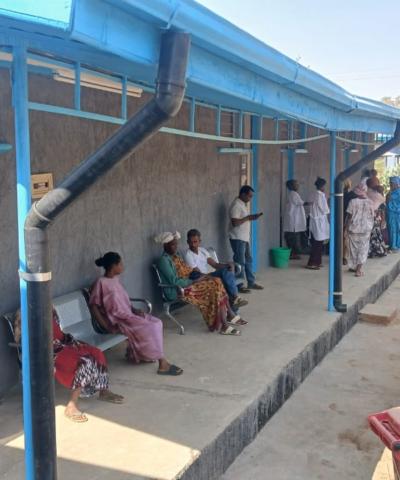
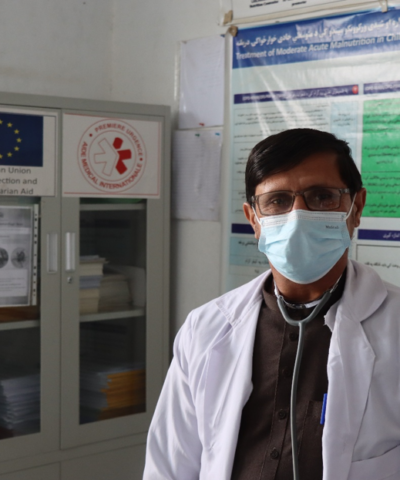
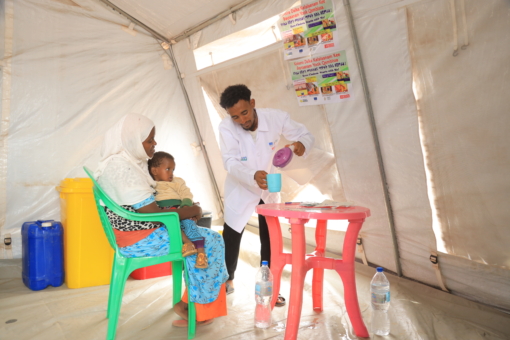
Première Urgence Internationale supported Cholera Treatment Centre (CTC) in Awash, Afar Region, 2025
In the precarious conditions of the camp, the tragedy intensified. Rahma’s one-year-old niece fell seriously ill, showing the classic signs of cholera: vomiting, diarrhea, and extreme weakness.
“I didn’t know what she had” Rahma recalls. “Our only focus was to get her to the doctors as fast as possible.”
The next day, Rahma herself fell ill and was admitted for treatment. Cholera, a deadly waterborne disease, spreads rapidly in crowded, resource-poor environments such as camps for displaced people.
Our expertise: a multisectoral response in less than 72 hours
Thanks to the Ethiopian Rapid Response Mechanism (ET-RRM), a key initiative coordinated by the International Rescue Committee (IRC) and co-funded by the European Union, IrishAid, and the Foreign, Commonwealth and Development Office (FCDO), Première Urgence Internationale’s ability to respond within 72 hours proved vital for Rahma and her niece. This demonstrates the value of a multi-donor, multi-stakeholder rapid response mechanism capable of responding quickly to emerging humanitarian crises.
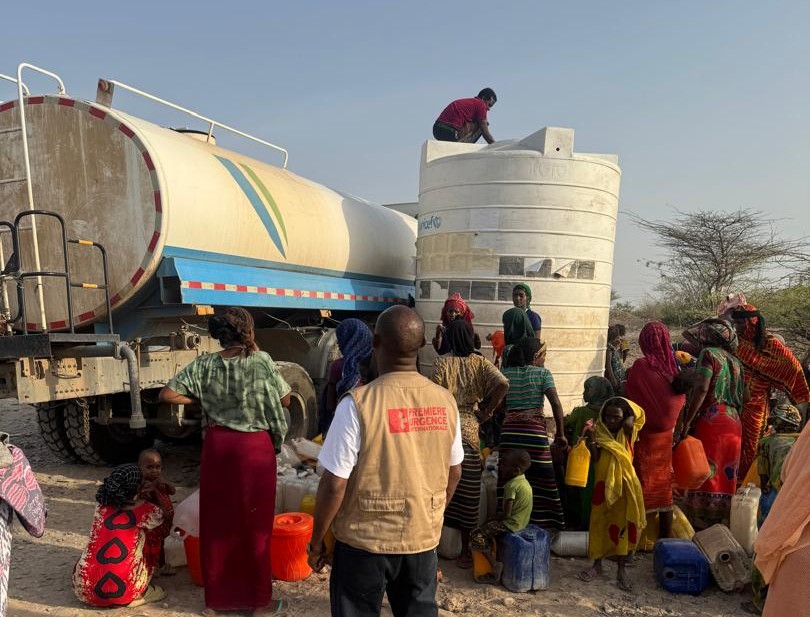
Water trucking at Dadido IDP Camp in Awash, Afar Region, Ethiopia, 2025.
Our intervention focused on several pillars to stop the cholera epidemic in Afar and stabilize the area:
- Health and emergency care: Rapid deployment of healthcare personnel to provide 24/7 service and fuel support to keep a standby ambulance ready for emergency referrals. Rahma and her niece thus received urgent and life-saving care.
- Prevention and training: Training of health personnel and community workers in the detection and management of cholera cases. Hygiene promotion sessions were held in the camps.
- Water and sanitation: In collaboration with the Afar Regional Disaster Risk Management Commission (DRMC), our teams ensured the delivery of drinking water by tanker truck to the camps to cover minimum daily needs. Water treatment kits were also distributed to households for safe storage.
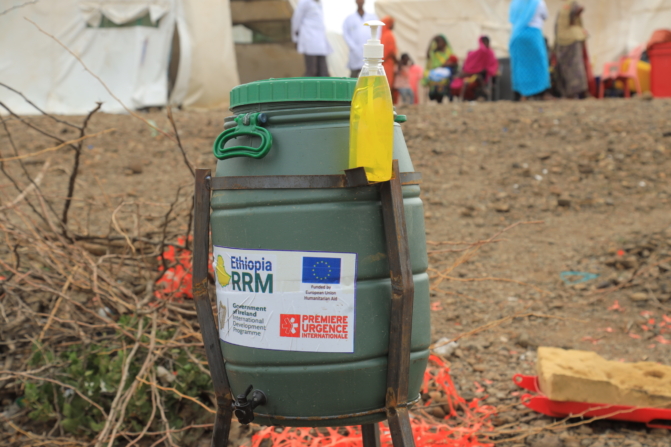
Handwashing station at Dadido IDP Camp in Awash, Afar Region, Ethiopia, 2025.
The impact of sustainable support
Although life in the camp remains difficult, Rahma and her niece are in good health. “After we were treated, the health workers explained to us what caused the illness and how we can stop it from spreading and recognizing the symptoms early” she said. Thanks to this assistance, no other family members had to be hospitalized.
More about
- Our mission in Ethiopia
- Our expertise in Health
- Our expertise in Water Sanitation and Hygiene
- Support our global initiatives
Our financial support